

Charles Dickens’s “A Tale of Two Cities” is not just a novel; it’s a profound exploration of the human experience set against the backdrop of the French Revolution. With its memorable opening line, “It was the best of times, it was the worst of times,” the story delves into themes of resurrection, sacrifice, and the complexities of social justice, making it relevant to contemporary readers facing similar struggles for equity and freedom. This review revisits the revolutionary epic, inviting readers to reflect on the contrasting forces of tyranny and liberty, and how history continues to echo in our own lives. As we peel back the layers of Dickens’s rich narrative, we’ll uncover insights that resonate powerfully today, igniting curiosity about how these historical events shape our understanding of society. Join us as we navigate the tumultuous seas of love, loss, and resilience in this timeless tale, ensuring that its lessons remain etched in our consciousness.
Thematic Overview of “A Tale of Two Cities
In Charles Dickens’s “A Tale of Two Cities,” the overarching themes resonate deeply with the historical backdrop of the French Revolution, reflecting the tumultuous period’s complexities and moral dilemmas. The narrative intricately weaves together ideas of resurrection, transformation, sacrifice, and the duality of human nature, thereby painting a vivid picture of societal upheaval and personal struggle. It serves not only as a historical account but as a timeless exploration of the human condition amidst chaos.
At the core of the novel is the theme of resurrection, which is exhibited through various characters who seek redemption and rebirth. Doctor Manette’s release from eighteen years of wrongful imprisonment symbolizes hope and rebirth, and it mirrors the possibility of renewal amidst despair. This theme is pivotal to understanding the characters’ motivations; for instance, Sydney Carton’s ultimate sacrifice illustrates the transformative power of love and redemption. He embodies the idea that selfless acts can lead to personal resurrection, suggesting that one can find meaning even in a world marred by injustice.
Another significant theme is sacrifice, which reverberates throughout the narrative. Characters often confront personal loss for the greater good. Lucie Manette serves as a beacon of compassion and resilience, using her nurturing spirit to uplift those around her, including the tragic Carton. Her relationships highlight the profound impact of love and loyalty, suggesting that personal sacrifices can forge deeper connections. Such themes compel readers to consider the costs of loyalty and sacrifice in their own lives.
Additionally, the duality and conflict within human nature are crucial to grasping the thematic richness of the book. The contrast between the social classes and the violent uprising during the Revolution reveals the inherent contradictions of society, challenging readers to reflect on the moral complexities of justice and revenge. Dickens masterfully juxtaposes light and darkness, hope and despair, fostering a nuanced understanding of the human experience.
Ultimately, the thematic tapestry of “A Tale of Two Cities” invites readers to reflect on the universal struggles for justice, identity, and purpose. Dickens’s exploration of these themes ensures that the novel remains relevant, compelling readers to engage with its moral lessons and historical intricacies even today. The enduring legacy of this epic narrative continues to foster discussions around the implications of sacrifice, transformation, and the quest for redemption in the face of societal upheaval.
Historical Context: The French Revolution’s Impact
The French Revolution serves as a pivotal backdrop for Charles Dickens’s “A Tale of Two Cities,” a narrative deeply rooted in the societal upheaval and moral complexities of that era. Understanding the historical context is crucial, as it not only shapes the characters and their motivations but also reflects the profound societal transformations occurring across France and Europe at large. The revolution, which erupted in 1789 and lasted over a decade, emerged from a confluence of economic distress, social inequality, and the influence of Enlightenment ideals. Citizens of the Third Estate, burdened by high taxes and poor living conditions while the nobility thrived, sparked a movement demanding liberty, equality, and fraternity.
This struggle is vividly illustrated in the novel through the stark contrasts between the privileged aristocracy and the suffering peasantry. Dickens portrays characters such as Charles Darnay and Sydney Carton, who encapsulate the dichotomy of innocence and guilt amidst chaos. Darnay, a member of the aristocracy who renounces his title to escape his family’s oppressive legacy, symbolizes the internal conflict faced by those of noble birth during the revolution. His journey back to France serves as a testament to the dangers of complacency in a time of fierce upheaval, as he is entangled in the very violence he sought to reject.
Moreover, the impact of the revolution extends beyond individual characters; it influences entire communities. Dickens depicts the mob mentality during the storming of the Bastille and other critical events, highlighting how rage and vengeance can lead to a breakdown of moral order. This theme prompts readers to consider how societal unrest can catalyze extreme actions and the loss of humanity in the quest for justice. The author’s vivid descriptions of chaos and bloodshed serve as a commentary on the revolution’s darker side, reminding us that the pursuit of liberty can spiral into horrific violence.
Through the lens of the French Revolution, “A Tale of Two Cities” becomes not just a story of personal redemption but also a profound exploration of the societal forces that shape human action. This contextual understanding of the revolution allows readers to appreciate the complexity of Dickens’s narrative, as it intertwines personal destinies with historical realities, ultimately prompting reflection on the cyclical nature of history and the ever-present struggles for justice and equality.
Character Analysis: Key Figures and Their Motivations
In Charles Dickens’s “A Tale of Two Cities,” the characters are not merely vehicles for the plot; they embody the complexities of human nature during a tumultuous historical period. Each character’s motivations are intricately tied to the revolution’s upheaval, showcasing themes of sacrifice, guilt, and redemption. Key figures such as Charles Darnay, Sydney Carton, and Dr. Manette offer readers a window into the moral dilemmas faced by individuals amidst societal chaos.
Charles Darnay represents a bridge between two worlds. Born into privilege, he renounces his family’s oppressive noble legacy and seeks to build a life rooted in equality and justice. His motivations are driven by a desire to escape the guilt associated with his aristocratic background; he seeks to live honorably in a world that is rapidly changing due to the revolution. Darnay’s return to France underscores his internal struggle as he is ultimately ensnared by his heritage. This tension reveals the novel’s exploration of the weight of family lineage and the moral responsibilities that accompany privilege, illustrating how personal choices can intersect with broader historical narratives.
In stark contrast to Darnay, Sydney Carton embodies the theme of wasted potential and profound redemption. Initially portrayed as dissolute and cynical, Carton’s transformation is central to the narrative’s emotional core. His love for Lucie Manette catalyzes his evolutionary journey, propelling him toward selflessness and sacrifice. Despite his shortcomings, Carton’s ultimate act of bravery-taking Darnay’s place at the guillotine-serves as a poignant commentary on the redemptive power of love and the possibility of finding meaning in sacrifice. Through Carton, Dickens illustrates the idea that even the most flawed individuals can ascend to greatness, prompting readers to reflect on their own capacities for change.
Dr. Alexandre Manette, too, presents a rich character study of trauma and resilience. As a former prisoner of the Bastille, his seven years of incarceration shape his perception of the world and influence his relationships, particularly with his daughter, Lucie. His struggles with flashbacks and emotional detachment invite readers to consider the psychological toll of political oppression, emphasizing how the past can haunt individuals long after the immediate threat has passed. Manette’s dedication to his daughter and his eventual reclaiming of purpose highlight the notion of healing through love, reinforcing Dickens’s exploration of personal transformation amidst societal turmoil.
Overall, the characters in “A Tale of Two Cities” serve to dramatize the intricacies of human motivations against the backdrop of revolution. Their journeys reflect not only the personal consequences of historical events but also the universal themes of sacrifice, redemption, and the quest for identity in times of crisis. Through detailed character analysis, readers can appreciate how Dickens deftly interweaves personal stories with larger societal issues, inviting a richer understanding of both the narrative and its historical context.
Symbolism in “A Tale of Two Cities
The richness of symbolism in Dickens’s work elevates A Tale of Two Cities beyond a mere historical narrative, allowing readers to explore profound themes through a variety of lenses. One of the most striking symbols is the recurring motif of light and darkness, which represents the duality of hope and despair that permeates the novel. The opening line famously contrasts these elements: “It was the best of times, it was the worst of times,” highlighting the simultaneous presence of enlightenment and ignorance in society. This dichotomy underlines the turbulent nature of the French Revolution, where the promise of equality often collided with chaos and violence.
Another significant symbol is the the guillotine, epitomizing the brutal reality of revolutionary justice. It serves as a chilling reminder of the extremities to which the quest for equality can lead. While it initially symbolizes freedom from tyranny, it ultimately becomes a representation of indiscriminate violence, blurring the lines between oppressor and oppressed. Through this symbol, Dickens critiques the notion that violent revolution is a straightforward path to justice, urging readers to reflect on the moral complexities intertwined with such drastic actions.
The Wine Perspective
Additionally, the spilled wine motif in the novel serves as a powerful symbol of the blood shed during the revolution. In the early chapters, when a wine cask breaks open in the streets of Paris, the red liquid flows across the ground, foreshadowing the impending bloodshed that will come from years of oppression. This imagery conveys the idea that the revolution will not only claim the lives of the aristocrats but will also result in the mutual suffering of all classes, suggesting an inescapable cycle of violence that characterizes the struggle for power.
Other Symbols
The broken wine cask can also be seen as a precursor to the revolution itself-a stark reminder that the populace is on the brink of overwhelming change. Its dramatic imagery invites readers to consider the themes of renewal and destruction that are prevalent throughout the novel. Against this backdrop, symbols like the shadow of the Bastille represent the haunting memories of oppression, as Dr. Manette’s imprisonment becomes a personal and collective trauma that lingers long past its physical existence.
Through these symbols, Dickens effectively creates a tapestry of meaning in A Tale of Two Cities, allowing readers to engage with the text on multiple levels. The interplay of light and darkness, the guillotine, and the spilled wine combine to challenge the perceived clarity of revolutionary motives while emphasizing the intricate relationship between personal sacrifice and societal change. Each symbol enhances the narrative’s exploration of human experience during a time of great upheaval, inviting a deeper inquiry into the nature of justice, love, and the consequences of historical actions.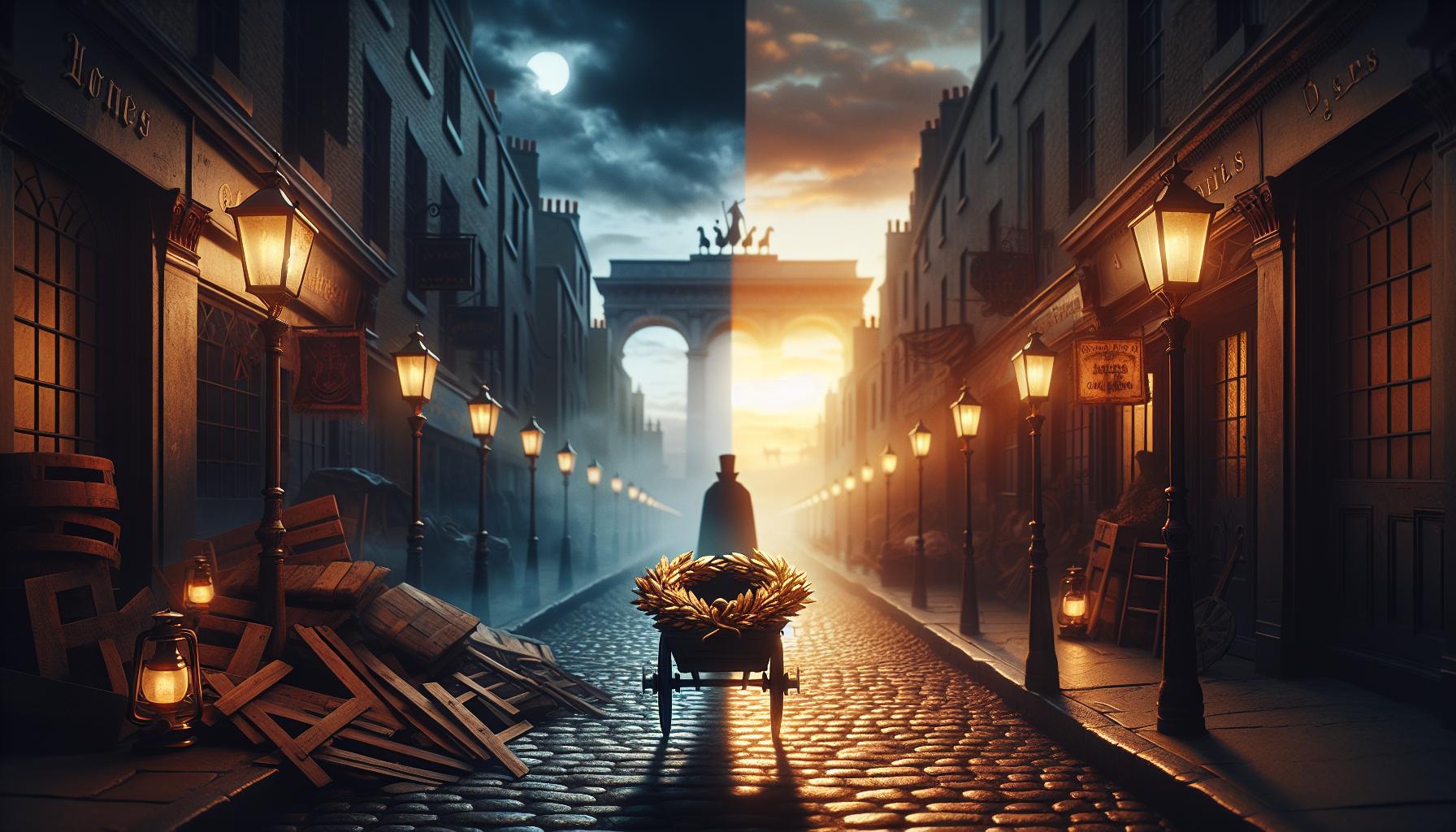
Themes of Sacrifice and Redemption Explored
The intricate themes of sacrifice and redemption form the emotional backbone of Charles Dickens’s *A Tale of Two Cities*, inviting readers to ponder the moral complexities of human relationships during tumultuous times. At the heart of this narrative lies Sydney Carton, whose journey from a dissipated life to profound selflessness epitomizes the transformative power of sacrifice. Carton’s unrequited love for Lucie Manette becomes a catalyst for his ultimate redemption, as he trades his life for the freedom of her husband, Charles Darnay. This act does not merely serve as a plot device; it embodies the theme that true nobility can arise from the depths of despair, urging readers to consider how personal redemption can stem from self-sacrifice.
Ultimately, the novel suggests that in a world rife with suffering and inequity, acts of selflessness can engender hope and change. Carton’s final declaration, “It is a far, far better thing that I do, than I have ever done,” crystallizes this theme, encapsulating his personal evolution and the novel’s exploration of the human capacity for growth through sacrifice. This moment reinforces the idea that even the most flawed individuals can achieve greatness by embracing the greater good.
Consequences of Sacrifice
Furthermore, Dickens intricately weaves the notion of sacrifice into the lives of various characters, illustrating how such actions ripple through the fabric of society. Dr. Manette’s years of imprisonment serve as another poignant example of a sacrifice made for the protection of his family and ideals. His eventual return to life is fraught with challenges, and the emotional scars left by his past underscore the heavy price of sacrifice. This duality raises critical questions: Do the sacrifices made by individuals genuinely lead to redemption, or do they evoke further suffering? The narrative’s exploration of these questions resonates deeply in contemporary discourse about social justice and personal responsibility, urging readers to reflect on the implications of their actions in the wider context of humanity.
By examining the juxtaposition of sacrifice and redemption, *A Tale of Two Cities* not only enriches its narrative but also engages audiences in a timeless dialogue about altruism and its potential to alter destinies. Dickens invites readers to consider how individual choices, particularly those involving great personal risk, can illuminate a path toward collective salvation. As we reflect on these themes today, we are encouraged to look beyond our circumstances and imagine how our sacrifices might contribute to a more just and compassionate world.
Narrative Techniques: Dickens’ Storytelling Mastery
In A Tale of Two Cities, Charles Dickens employs a variety of narrative techniques that enhance the story’s dramatic impact and thematic depth. One of the most notable aspects of his storytelling is the use of parallelism. Dickens juxtaposes the contrasting lives in London and Paris during the tumultuous period of the French Revolution, creating a rich backdrop against which the characters’ personal struggles unfold. This technique serves not only to highlight societal disparities but also to engage readers in the moral dilemmas faced by individuals during an era defined by chaos and violence.
Another powerful tool in Dickens’s narrative arsenal is his use of memorable imagery and symbolism. The novel opens with one of literature’s most famous lines, establishing a cadence that resonates throughout the book: “It was the best of times, it was the worst of times.” Such dichotomies serve to frame the conflicting emotions and experiences that pervade the story. Additionally, symbols like the sharp guillotine and the echo of footsteps represent the uncontrolled forces of revolution and retribution, drawing readers into a visceral understanding of the period’s brutality.
Moreover, Dickens excels in characterization, crafting complex figures whose motivations are intricately linked to the broader social and historical context. Sydney Carton, for instance, embodies the themes of sacrifice and redemption, his internal struggles articulated through Dickens’s careful narrative focus. The use of free indirect discourse allows readers to glimpse the thoughts and emotions of characters, providing a more intimate connection to their journeys. This technique deepens empathy, encouraging readers to reflect on their own choices and the consequences that follow.
The structural composition of the novel also merits attention. Dickens employs a methodical pacing that mirrors the unfolding of events both personal and political. Chapters alternately culminate in climactic moments of tension, followed by quieter reflections, which effectively heightens emotional stakes. The cliffhanger endings of some chapters compel readers to continue, creating an engaging rhythm that blends suspense with thematic exploration.
Ultimately, Dickens’s narrative mastery in A Tale of Two Cities transforms the historical epic into a deeply personal story. By intricately weaving together parallel narratives, rich symbolism, and profound character development, he invites readers to explore the complexities of sacrifice, redemption, and the human spirit in the face of revolutionary change. This blend of techniques not only captivates but also encourages readers to ponder timeless questions of morality and consequence in their own lives.
Critical Reception: How Critics Have Viewed the Book
The critical reception of “A Tale of Two Cities” has evolved significantly since its publication in 1859, reflecting both the shifting literary landscape and the social contexts it addresses. Initially released as a serial, Dickens’s novel captivated readers with its emotional depth and dramatic plot twists, quickly becoming one of his most popular works. Early reviewers praised its rich characterizations and gripping narrative-a testament to Dickens’s prowess in weaving together themes of sacrifice and redemption against the backdrop of the French Revolution.
However, not all criticism has been glorifying. Some contemporary critics argued that Dickens’s portrayal of historical events and figures lacked nuance, reducing the revolution to a mere backdrop for melodrama. The character of Sydney Carton, while celebrated for his poignant arc of redemption, has faced scrutiny for his seemingly simplistic sacrifice in the face of grave societal injustices. Critics have noted that his actions might shift the focus away from broader class struggles, instead framing them within individual moral quandaries. As literary criticism has evolved, scholars have also acknowledged this tension, highlighting the need to engage critically with Dickens’s romanticization of martyrdom and heroism.
Modern Interpretations and Legacy
In more recent discussions, “A Tale of Two Cities” has been re-evaluated through various critical lenses, such as postcolonial theory and feminist criticism. Modern readers and scholars often examine the novel’s exploration of revolutionary themes not only in the context of 19th-century Europe but also in relation to contemporary socio-political issues. The stark contrasts between the plight of the oppressed and the excesses of the upper class resonate with ongoing discussions about inequality and justice. Critics argue that Dickens’s work remains relevant, serving as a cautionary tale about the cyclical nature of violence and oppression.
Moreover, the novel’s adaptability in various media-ranging from stage productions to films-has contributed to its lasting impact and allows for ongoing reinterpretations of its themes. Each adaptation brings a new perspective, often emphasizing different aspects of the narrative, thereby enriching the dialogue surrounding Dickens’s work and broadening its appeal to new generations of readers. This dynamic reception underscores not only the novel’s artistic merit but also its capacity to engage with real-world issues, reinforcing its place as a pivotal work in the canon of English literature.
Overall, while “A Tale of Two Cities” has faced its share of critical challenges over the years, it continues to be celebrated for its emotional resonance, intricate character development, and the profound moral questions it raises, ensuring its status as a revolutionary epic that speaks to the human experience across ages.
Adaptations of “A Tale of Two Cities” in Film and Theatre
The enduring legacy of *A Tale of Two Cities* is magnified through its various adaptations in film and theatre, each striving to capture the novel’s complex themes of sacrifice, redemption, and the human condition against the tumultuous backdrop of the French Revolution. Since its publication, the story has invoked dramatic interpretations, showcasing its timeless relevance and emotional depth, making it a compelling choice for adaptation.
Among the most notable adaptations is the 1935 film directed by Jack Conway, which was one of the earliest to bring Dickens’s dramatic narrative to the silver screen. Starring Ronald Colman as Sydney Carton, this version is praised for its fidelity to the source material and its ability to convey the profound themes of love and sacrifice. It set a standard for future adaptations, emphasizing the visual storytelling that film can provide, enhancing the dramatic moments with cinematic techniques.
Modern Retellings and Theatrical Interpretations
In more recent years, adaptations such as the 2008 BBC miniseries and the 2014 stage musical have revitalized interest in Dickens’s tale. The BBC adaptation retains the novel’s emotional weight while reimagining some characters and plot elements, offering a fresh perspective while still adhering to the original narrative. The stage musical, on the other hand, introduces a dynamic element through song and dance, aiming to engage newer audiences and highlight the story’s emotional core in an innovative way.
Engaging with the story through theatre allows for unique interpretations, often encouraging a deeper connection with the characters. Stage productions routinely explore the motivations behind characters’ actions, such as the significance of Carton’s ultimate sacrifice. By bringing audiences closer to the emotional stakes, these adaptations challenge viewers to reflect on the moral dilemmas presented, making the themes of social injustice and redemption all the more resonant.
Key Adaptations Overview
| Title | Medium | Year | Notable Features |
|---|---|---|---|
| 1935 Film | Film | 1935 | Classic adaptation, emphasis on visual storytelling |
| 1958 Adaptation | Television | 1958 | Rich character development, serialized storytelling |
| 2008 Miniseries | Television | 2008 | Modern reinterpretation, fresh character angles |
| 2014 Musical | Theatre | 2014 | Dynamic engagement through music, appeals to new audiences |
These diverse adaptations highlight the story’s resilience and its ability to resonate across different formats and eras. Each version invites audiences to grapple with the ethical questions posed by Dickens, prompting a reevaluation of our modern societal struggles in light of historical injustices. As such, engaging with *A Tale of Two Cities* through its adaptations allows for an enriched understanding of both the source material and its broader implications.
Comparative Analysis: Other Dickens Novels
The exploration of *A Tale of Two Cities* naturally invites comparison with other works by Charles Dickens, particularly those that also delve into themes of social justice, personal sacrifice, and the human condition. Dickens, renowned for his intricate characterizations and profound social commentary, presents a rich tapestry of narratives that reflect various aspects of Victorian society. Notable among these is *Great Expectations*, where personal growth and the impact of social class shape the protagonist, Pip. Both novels tackle the interplay of fate and personal agency, but while *A Tale of Two Cities* is steeped in the chaos of revolution, *Great Expectations* navigates the subtleties of personal ambition and societal expectations.
In contrast, *David Copperfield* offers a semi-autobiographical account of Dickens’s own challenges and triumphs. This novel shares with *A Tale of Two Cities* the struggle for identity against a backdrop of societal constraints. Both works showcase characters who undergo significant transformations in their pursuit of self-discovery, but *David Copperfield* leans more towards a coming-of-age narrative, highlighting themes of resilience in the face of adversity. Meanwhile, the stark social commentary embedded in *Oliver Twist* echoes the revolutionary fervor of *A Tale of Two Cities*, as both critically address the plight of the poor and the failures of societal institutions.
### Comparative Themes
To encapsulate the thematic connections among these works, the following table illustrates key elements:
| Novel | Themes | Main Character Journeys |
|---|---|---|
| A Tale of Two Cities | Revolution, sacrifice, resurrection | Sydney Carton’s transformation through sacrifice |
| Great Expectations | Ambition, social class, personal growth | Pip’s journey from childhood to maturity |
| David Copperfield | Identity, resilience, personal growth | Copperfield’s rise from hardship to success |
| Oliver Twist | Social injustice, childhood, poverty | Oliver’s fight for a better life against overwhelming odds |
In examining the dynamics among these narratives, readers can uncover Dickens’s enduring exploration of the human spirit in diverse contexts-from the chaos of revolution to the nuanced threads of personal ambition and societal critique. By engaging with these varied portrayals of perseverance and moral fortitude, readers not only deepen their understanding of *A Tale of Two Cities* but also appreciate its place within the broader literary landscape shaped by Dickens’s unparalleled insight into human nature and society.
Literary Legacy: Influence on Modern Literature
The impact of A Tale of Two Cities on modern literature is both profound and enduring, serving as a cornerstone for narratives exploring themes of revolution, justice, and personal sacrifice. This classic novel not only captures the tumult of the French Revolution but also resonates with contemporary issues, thereby influencing countless authors and storytellers who grapple with the complexities of societal upheaval and moral dilemmas.
One crucial aspect of its literary legacy is the novel’s exploration of duality, a theme that fosters rich narrative possibilities. The juxtaposition of London and Paris, calmness versus chaos, and individualism against collectivism encourages modern writers to explore contrasting settings and ideologies within their narratives. For example, contemporary dystopian fiction, such as The Handmaid’s Tale by Margaret Atwood, often incorporates similar contrasts to underscore societal issues and to provoke critical thought about the human condition. Furthermore, the motif of resurrection and transformation found in characters like Sydney Carton continues to inspire narratives focused on redemption and personal growth, evident in works like The Kite Runner by Khaled Hosseini, which deeply explores themes of guilt and forgiveness.
The novel’s memorable characters are another significant influence; their motivations and moral complexities have spawned countless archetypes in literature. Readers and writers alike identify with or respond to characters who embody struggles against oppressive forces. For example, today’s antiheroes in literature and film, like Walter White from Breaking Bad, reflect similar internal conflicts about morality and justice, echoing Carton’s profound sacrifices for love and redemption.
Additionally, A Tale of Two Cities serves as a study in narrative structure. Dickens’s use of foreshadowing, vivid imagery, and emotional depth has influenced literary techniques across genres. Modern authors often draw on Dickensian techniques to develop intricate plots and character arcs that resonate with readers on a deeper level. This method of storytelling can be seen in the works of authors like Zadie Smith and Ian McEwan, who similarly weave personal narratives with broader social critiques.
In summary, the literary legacy of A Tale of Two Cities is far-reaching and multifaceted. Its thematic richness, compelling characters, and innovative narrative techniques continue to shape modern literary landscapes, inspiring new generations of writers to explore the complexities of human experience, societal challenges, and moral inquiry. Engaging with this classic not only enriches our understanding of literature but also enhances our ability to navigate contemporary issues through the lens of storytelling.
Reader Experience: Engaging with Dickens Today
Reading “A Tale of Two Cities” offers a transformative experience that resonates deeply with both historical context and modern themes. Many readers find themselves drawn into Dickens’s vivid portrayal of the tumultuous times surrounding the French Revolution, allowing for reflections on societal change, justice, and the human condition. Engaging with this narrative encourages readers to consider parallels with contemporary issues, such as social inequality and the moral struggles of individuals amidst chaos. The novel’s famous opening line, “It was the best of times, it was the worst of times,” serves as a powerful reminder of the dualities present not just in Dickens’s world, but in our own.
To enhance your engagement while reading, consider a few practical approaches. First, immerse yourself in the historical context by researching the French Revolution. Understanding the events that inform the story can elevate your comprehension of character motivations and thematic developments. A great resource is a timeline of events from that period, which can be found through reputable educational sites or historical databases. Additionally, annotating the text can deepen your experience; jotting down thoughts or connections to modern themes as you read allows for a more personalized interaction with the material. Reflecting on characters’ choices can also prompt discussions with fellow readers or within a reading group, where different interpretations and insights can enrich the understanding of this complex work.
Another unique aspect of engaging with Dickens today is the accessibility of adaptations. A wealth of film and theater productions reinterpret “A Tale of Two Cities,” bringing new life to the classic story. Watching an adaptation after reading the book can provide a fresh perspective on characters and narrative choices, enhancing your appreciation of Dickens’s intricate plotting and character development. You might explore various adaptations-from classic films to contemporary stage performances-finding how each interprets key scenes and themes.
Moreover, consider the novel’s enduring relevance in discussions surrounding sacrifice and redemption. Think about how these themes manifest in modern literature and media, and explore their implications in today’s society. For example, you might relate Sydney Carton’s narrative to contemporary stories of personal transformation in the face of societal challenges, such as those depicted in recent novels or films that explore themes of identity and moral complexity.
By approaching “A Tale of Two Cities” with curiosity and an open mind, you can uncover many layers of meaning and relevance. This classic isn’t merely a historical text; it’s a rich tapestry that invites readers to reflect on their own lives and the world around them, making it a timeless work that continues to engage and inspire audiences today.
Study Guide: Key Quotes and Discussion Questions
The exploration of key quotes in “A Tale of Two Cities” not only enhances comprehension of the narrative but also deepens appreciation for Dickens’s craftsmanship. Engaging with these quotes encourages readers to reflect on pivotal themes, character motivations, and the historical context surrounding the story. Here are some essential quotes along with discussion questions to stimulate thought and discussion:
Key Quotes
- “It was the best of times, it was the worst of times…” – This famous opening line sets the stage for the dualities present throughout the novel. Consider its implications about the era portrayed in the book and how it relates to contemporary societal conditions.
- “I am the resurrection and the life…” – Sydney Carton’s declaration highlights themes of sacrifice and redemption. Discuss how this relates to his character arc and its emotional impact on the story’s conclusion.
- “A wonderful fact to reflect upon, that every human creature is constituted to be that profound secret and mystery to every other.” – This quote suggests the complexities of human relationships. Explore how this theme of hidden depths is woven throughout the interactions among the main characters.
- “It is a far, far better thing that I do, than I have ever done…” – This line symbolizes ultimate sacrifice. Delve into what this means within the context of personal transformation and societal sacrifice.
Discussion Questions
- What do you believe Dickens is suggesting about the nature of revolution through the contrasting experiences of characters like Charles Darnay and Sydney Carton?
- How do the opening and closing lines reflect the transformative power of love and sacrifice in the context of the era?
- In what ways do the characterizations of Lucie Manette and Madame Defarge represent differing responses to trauma and loss during the Revolution?
- How can modern readers relate to the themes of resurrection and transformation highlighted in the novel? Are there contemporary examples that resonate with these ideas?
These quotes and questions serve as a framework for deeper analysis, inviting participants to explore the rich tapestry of themes present in “A Tale of Two Cities.” Leveraging such a study guide can foster meaningful discussions and enhance overall understanding of Dickens’s revolutionary epic.
Q&A
Q: What are the major themes in “A Tale of Two Cities”?
A: The major themes in A Tale of Two Cities include sacrifice, redemption, resurrection, and the struggle against oppression. Dickens explores how personal and social transformations arise amidst the chaos of the French Revolution, emphasizing the duality of human nature and the possibility of renewal through suffering.
Q: How does the setting of the French Revolution influence the plot?
A: The turbulent backdrop of the French Revolution shapes the plot of A Tale of Two Cities, driving character motivations and actions. The clash between aristocracy and revolutionaries creates a charged atmosphere that reflects personal conflicts and historical upheaval, allowing Dickens to comment on social justice and morality.
Q: What is the significance of the title “A Tale of Two Cities”?
A: The title A Tale of Two Cities refers to Paris and London, contrasting the social conditions and political climates of both cities during the French Revolution. This juxtaposition highlights themes of chaos versus order and despair versus hope, illustrating how different societies respond to crisis.
Q: Who are the central characters in A Tale of Two Cities, and what are their roles?
A: Central characters include Charles Darnay, who represents the oppressed, and Sydney Carton, who embodies redemption through sacrifice. Lucie Manette acts as a symbol of love and compassion, while Doctor Manette signifies the traumatic impact of political turmoil, enriching the novel’s emotional depth.
Q: What literary techniques does Dickens employ in A Tale of Two Cities?
A: Dickens uses a range of narrative techniques, including foreshadowing, symbolism, and parallelism. His vivid imagery and contrasting character arcs enhance the emotional weight of the story, drawing readers into the historical context and moral dilemmas faced by the characters.
Q: How has A Tale of Two Cities been received over time?
A: A Tale of Two Cities has seen critical acclaim since its publication, lauded for its powerful narrative and historical relevance. Critics appreciate Dickens’ ability to weave complex themes within an accessible story, ensuring the novel’s enduring presence in literary discussions and adaptations.
Q: What adaptations exist for A Tale of Two Cities, and how do they interpret the story?
A: Numerous adaptations of A Tale of Two Cities exist, including films, stage plays, and radio dramas. Each interpretation emphasizes different elements of the narrative, focusing on themes such as sacrifice, love, or political upheaval, showcasing the versatility of Dickens’ work across mediums.
Q: How can one engage with the themes of A Tale of Two Cities today?
A: Engaging with the themes of A Tale of Two Cities today can involve discussions around social justice, historical awareness, and personal sacrifice. Readers can explore modern parallels in societal struggles, relating Dickens’ insights to current events and fostering a deeper understanding of historical impacts.
In Summary
Thank you for joining us in this exploration of “A Tale of Two Cities.” In revisiting this revolutionary epic, we uncovered not only the gripping narrative but also the profound themes of sacrifice and resurrection that resonate even today. If you’re eager to delve deeper, check out our related articles on themes of revolution in literature or character analysis that further illuminate Dickens’ masterpiece.
Don’t miss out-subscribe to our newsletter for exclusive insights and updates! If you have thoughts or reflections on the book, we’d love to hear from you in the comments section below. Explore more about literary reviews or discover tools and resources that can enhance your reading experience. Remember, every page holds a new adventure, so let’s keep the conversation going and your curiosity thriving!
Get our latest guides, news, and insights highlighted in your Google Search & AI Overviews.










