
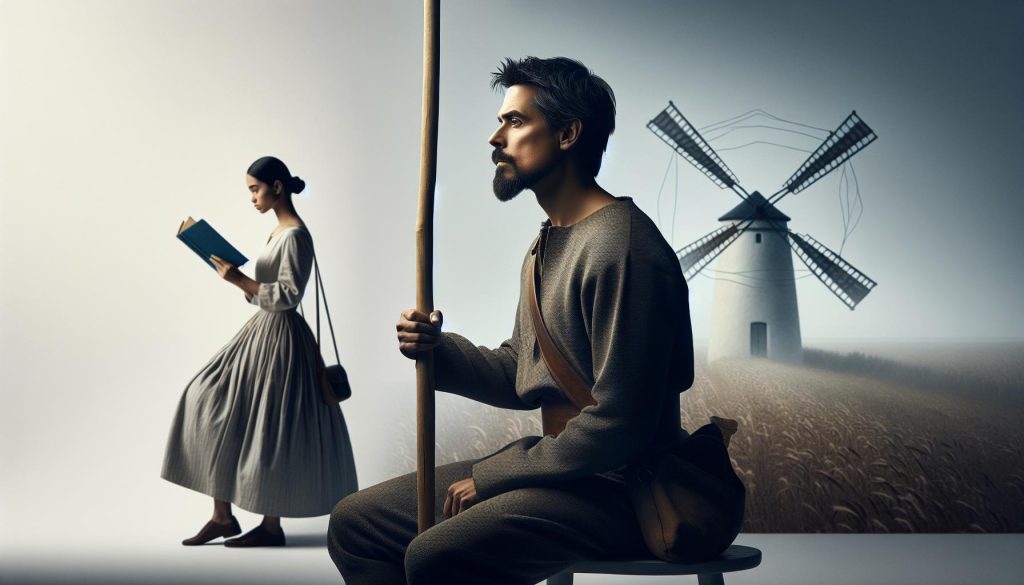
“Don Quixote,” a seminal work by Miguel de Cervantes, delves into the complex interplay between idealism and reality through the misadventures of an aging nobleman who, inspired by chivalric romances, becomes a self-styled knight-errant. This exploration carries profound implications for our understanding of human aspirations and the challenges of facing an often unyielding world. At its core, the novel raises critical questions: How do our dreams shape our reality? What happens when fantasy collides with harsh truths? These themes resonate today, compelling readers to reflect on their own desires and the societal structures that frame them. As we navigate this timeless tale, prepare to uncover insights that not only enrich our appreciation of literature but also provide a lens through which to examine our own lives. Join us in exploring these intricate layers of Don Quixote’s journey and discover how this classic narrative remains relevant in fostering a deeper understanding of the human condition.
Idealism in Don Quixote: A Comprehensive Overview
In the rich tapestry of literature, few characters are as emblematic of idealism as Don Quixote, the protagonist of Miguel de Cervantes’ timeless novel. This work serves not only as a narrative of his grandiose adventures but also as a profound exploration of the complexities of dreaming versus the starkness of reality. Don Quixote’s fierce commitment to his ideals-particularly his notion of chivalry-highlights the beauty and folly of striving for an unattainable vision in a world that often resists change.
At its core, the novel delves into the tension between heartfelt aspirations and the pragmatic constraints of existence. Don Quixote, enamored by tales of knightly valor, sets out to revive chivalric ideals in a society that has moved on. This pursuit fosters a series of clashes between his lofty ideals and the mundane world around him, leading to comedic yet poignant moments that challenge both the character and the reader to reflect on the characteristics of true heroism. His faithful squire, Sancho Panza, embodies a contrasting realism, providing a grounded perspective that amplifies the central conflict: the pull of aspiration against the gravity of everyday life.
Cervantes masterfully utilizes the character of Don Quixote to challenge societal norms, encouraging readers to ponder whether idealism is inherently noble or fundamentally naïve. For example, Quixote’s encounters-against windmills mistaken for giants and inns perceived as castles-capture moments of absurdity that leave a lasting impression, merging humor with sharp critique. Through these episodes, Cervantes invites a deeper inquiry into the merits and pitfalls of idealism, ultimately affirming the significance of dreams while acknowledging the sobering reality that often dictates their feasibility.
In essence, the character of Don Quixote and his idealism serve as a mirror for our own pursuits and aspirations. They provoke questions about the value of our dreams, our capacity for profound belief in the impossible, and the ultimate human experience of reconciling hope with reality. In navigating this complex relationship, Cervantes not only crafts a narrative about a lonely knight but also prompts us to consider our places in a world that often feels indifferent to our highest ideals.
Reality vs. Idealism: The Central Conflict
The tension between pursuit of lofty ideals and the mundane realities of life resonates powerfully throughout Miguel de Cervantes’ seminal work, positioning it as a still-relevant exploration of the human condition. At the heart of this tension lies Don Quixote himself, whose delusions of grandeur compel him to embark on a quest to revive chivalric values in a world that has largely abandoned them. His adventures, driven by an uncontrollable thirst for heroism, expose the absurdities of both his vision and the reality he encounters. Through this conflict, Cervantes does not merely tell the tale of a misguided knight; he poses profound questions about the very nature of idealism and its place in a rapidly changing society.
The central conflict between reality and idealism manifests through key encounters that punctuate the narrative. For instance, Quixote’s infamous tilt at windmills, which he insists are fearsome giants, serves as a metaphor for the struggle against unattainable aspirations. In moments like these, the juxtaposition of Quixote’s vivid imagination against the stark, often humorous, backdrop of reality invites readers to reflect on their interpretations of success and failure. Such episodes illustrate the folly inherent in Quixote’s pursuits, yet they also embody the spark of creativity and dream that propels humanity forward. This duality raises a tantalizing inquiry: is it the striving for our ideals that defines us, even in failure?
In contrast, Sancho Panza occupies a critical position as the voice of pragmatism and realism. His unwavering loyalty underscores the essential relationship between idealism and reality. While Quixote repeatedly plunges into a world of fantasy, Sancho provides grounding anecdotes that highlight the absurdity of his master’s delusions. In fact, Sancho often serves as a mirror reflecting the absurdity of Quixote’s escapades, allowing readers to appreciate the worth of both perspectives. As the narrative unfolds, it becomes evident that neither idealism nor realism alone can capture the full spectrum of human experience. Instead, Cervantes suggests that a balance between the two-where dreams inspire but practicality tempers-will lead to a more authentic existence.
Ultimately, this rich exploration prompts readers to evaluate their own lives through the prism of Quixote’s journey. It encourages a consideration of our dreams and aspirations amidst harsh realities. Through the lens of Cervantes’ masterful storytelling, we are left to ponder whether we are willing to take the ride of our own quixotic quests, embracing the laughter, challenges, and introspections that accompany the battle between our ideal selves and the world as it is.
Character Analysis: Don Quixote and Sancho Panza
In Miguel de Cervantes’ Don Quixote, the titular character and his loyal squire Sancho Panza form a compelling duo that exemplifies the intricate dance between idealism and reality. Don Quixote, driven by lofty ideals and an obsession with chivalric fantasies, represents the relentless pursuit of dreams, while Sancho’s down-to-earth pragmatism serves as a necessary counterbalance, grounding the narrative in the harsh truths of everyday life. This relationship not only facilitates a rich dynamic throughout the story but also invites readers to explore the conflict of ideals against the often unyielding nature of reality.
Don Quixote, the self-proclaimed knight-errant, embarks on his adventures with unwavering conviction. His misguided quest to revive chivalry is fueled by a profound romanticism rooted in the literature he reveres. For example, his encounters with windmills, which he perceives as fearsome giants, symbolize his noble yet futile struggle against illusory obstacles. This disconnect between his aspirations and the tangible world around him often leads to humorous yet poignant moments that embody the essence of quixotic folly. Despite the absurdity of his quests, Don Quixote elicits sympathy as he grapples with an idealized version of heroism, prompting readers to reflect on their own aspirations and the societal values they hold dear.
In stark contrast, Sancho Panza epitomizes realism and practicality. As his squire, Sancho frequently intervenes with his earthy wisdom and common sense, providing a necessary foil to Quixote’s extravagant delusions. His famous exclamations of practicality, such as the fact that “the windmills are indeed not giants,” offer a refreshing perspective that invites laughter while also providing critical insight into the folly of blind ambition. Yet, it is essential to note that Sancho, despite his practical nature, is not devoid of dreams; he is enchanted by the idea of becoming a governor and relishes the comforts that Quixote’s pursuits might bring him. This duality enriches Sancho’s character, making him a mirror reflecting the complexities of human desires.
Their contrasting but complementary natures forge an enduring relationship that embodies the broader themes of the novel. Cervantes skillfully uses their interactions to explore the tension between dreams and reality, emphasizing that a balanced perspective is essential for a fulfilling existence. Readers are left to ponder how the interplay of idealism and realism shapes their lives, echoing Cervantes’ critique of societal norms and the quest for meaning in a complex world. Ultimately, the bond between Don Quixote and Sancho Panza serves as a reminder of the rich tapestry of human experience, balancing noble aspirations with the grounding truths of life.
The Role of Fantasy in Shaping Reality
In Miguel de Cervantes’ Don Quixote, the power of fantasy is not merely a whimsical escape; it serves as a vital lens through which reality is shaped and refracted. Delving into the fantastic elements of the narrative reveals how Don Quixote’s imagination, driven by his obsession with chivalric ideals, fundamentally alters his perception of the world around him. His escapades highlight the tension between what he perceives and the stark truths of reality, raising essential questions about the nature of dreams and their place within our lives.
The very fabric of Quixote’s adventures is woven from his fantastical interpretations of the world. For example, when he confronts windmills that he believes to be ferocious giants, it exemplifies how strongly held beliefs can distort reality. This interaction is pivotal, as it underscores the idea that fantasy can both inspire and deceive. Quixote’s delusions may appear absurd, yet they also point towards a deeper truth: that imagination has the power to catalyze action and purpose, even if it leads to misguided endeavors. In this way, Cervantes plays with the concept that our fantasies can motivate us to rise above mundane life, regardless of their veracity.
Ultimately, the interplay of fantasy and reality in Don Quixote encourages readers to reflect on their own lives. We are all driven by dreams and aspirations, and like Quixote, we must navigate the often tumultuous waters where ideals clash with the mundane. This exploration serves as a reminder that while fantasy can enrich our experiences, it also necessitates a grounding in reality to avoid the pitfalls of disillusionment.
Cervantes masterfully portrays this dynamic through juxtaposed characters; while Quixote represents the idealist pursuing impossible dreams, Sancho Panza embodies a more practical approach to life. Their relationship illustrates that while fantasy can shape our understanding and goals, the integration of a pragmatic perspective is equally essential. As readers navigate this rich narrative landscape, they are invited to consider how their own fantasies can inspire personal growth while remaining anchored in the truths of their realities.
Historical Context: Spain’s Influence on the Narrative
The backdrop of Miguel de Cervantes’ Don Quixote reveals a fascinating interplay of historical and cultural dynamics that not only shaped Spain but also influenced the narrative itself. The novel was published in the early 17th century, a time marked by significant social, political, and religious transformations in Spain. This era was characterized by the decline of Spanish imperial power and the waning influence of chivalric ideals, elements that are central to understanding the protagonist’s quixotic quest.
During Cervantes’ life, Spain was grappling with the consequences of its former glory. The Spanish Empire was in decline due to military overreach, economic troubles, and the onset of the Thirty Years’ War. This historical context is crucial, as it frames the contrasting ideals of knighthood and the stark realities of everyday life that Don Quixote confronts. The protagonist’s obsession with chivalric romances can be seen as a reaction against the disillusionment of the declining Spanish nobility and a longing for the noble values that have been lost in an increasingly pragmatic society.
In addition to political struggles, societal changes also played a role in shaping the narrative. The rise of the middle class and a shift in economic structures emphasized practical achievements over noble lineage. Characters like Sancho Panza symbolize this emerging middle class perspective, grounding Don Quixote’s lofty ideals in the realities of more mundane, earthly concerns. Their relationship reflects the tension between aspiration and practicality, illustrating how Cervantes captures the complexity of human ambitions in a rapidly changing world.
Furthermore, the religious climate during this period-marked by the Spanish Inquisition and a strong adherence to Catholic doctrines-also influences the moral underpinnings of the narrative. Cervantes’ exploration of themes like honor, virtue, and redemption resonates with contemporary Spanish values, inviting readers to consider how deeply religious and ethical conflicts impact the characters’ journeys. As Don Quixote pursues his ideals amid a backdrop of uncertainty and decline, Cervantes masterfully weaves together the historical and cultural fabric of Spain, enriching the layers of meaning in this timeless tale.
In understanding the historical context of Don Quixote, readers can appreciate how Cervantes not only critiques the chivalric tradition but also reflects the complexities of identity and aspiration within an evolving Spanish society. This nuanced portrayal invites readers to explore their personal quests for meaning and purpose in the light of a fluctuating world-a theme that continues to resonate today.
Major Themes Explored in Don Quixote
The transformative power of dreams and ideals intersects uniquely with the reality of everyday life in Miguel de Cervantes’ Don Quixote, illustrating an array of profound themes that resonate across time. Central to the narrative is the tension between idealism and practicality. Don Quixote, driven by his noble aspirations, seeks to revive chivalric values in a world that no longer cherishes them. His misguided quest calls into question the worth of dreams when juxtaposed with the harshness of reality, leaving readers to ponder: can ideals stand firm against the relentless advances of pragmatism?
Exploration of Identity and Self-Perception
Another significant theme is the exploration of identity and self-perception. Don Quixote’s transformation from a retired gentleman to a self-styled knight errant raises questions about the nature of reality and fantasy. His belief in his own identity leads him to engage in adventures that often end in humiliation. This theme resonates with modern readers, encouraging a reflection on how personal perceptions can shape one’s reality. For instance, the character of Sancho Panza, who embodies a more pragmatic worldview, serves as a counterbalance to Don Quixote’s lofty ideals. Their interactions highlight the struggle between aspiration and realism, illustrating how individual identities can be affected by the interplay of dreams and tangible experiences.
The Nature of Truth and Perspective
Cervantes also delves into the nature of truth and perspective, a theme that invites readers to consider the subjective nature of reality. Throughout their adventures, Don Quixote and Sancho Panza encounter several different characters, each presenting varying interpretations of truth. The novel suggests that what is perceived as reality can be shaped by personal beliefs and societal contexts, emphasizing that multiple truths coexist. As Don Quixote charges at windmills believing them to be giants, the reader is prompted to consider how perceptions can distort reality, leaving a lasting impact on individuals’ journeys.
Social Critique and Class Dynamics
Moreover, Cervantes critiques social norms and class dynamics of his time. Through his characters, particularly Don Quixote’s noble delusions and Sancho’s grounded wisdom, the novel examines the shifting roles of the aristocracy and emerging middle class in early 17th-century Spain. This social commentary prompts readers to reflect on how class influences perceptions and interactions. For instance, Don Quixote’s insistence on a romanticized version of knighthood contrasts with Sancho’s cynical pragmatism, providing a nuanced commentary on the ambitions and disenfranchisement prevalent in their society.
In summary, the themes explored in Don Quixote extend beyond mere entertainment to engage with fundamental questions of human existence, identity, and societal structure. Cervantes invites readers to navigate the complexities of idealism and reality, urging a deeper understanding of personal ideals against the backdrop of an ever-evolving world. Consideration of these themes fosters a rich discussion that can inspire readers to reflect on their own quests for meaning, making the novel eternally relevant.
Symbolism and Metaphor: Layers of Meaning
In “Don Quixote,” Miguel de Cervantes weaves a tapestry rich in symbolism and metaphor that adds depth to the narrative, enhancing its exploration of idealism versus reality. When readers delve into this multifaceted landscape, they discover not just a comic tale of a misguided knight but profound commentary on the human condition and societal norms. Each character and event in the novel serves as a conduit to broader themes, prompting reflection on the complexities of existence.
One of the most striking symbols in the novel is the windmill, which Don Quixote perceives as a ferocious giant. This encounter represents the quintessential conflict between reality and perception, embodying how deeply held beliefs can distort understanding. The windmill, a mundane object, becomes a formidable foe in Quixote’s imagination, illustrating how idealism can lead to absurdity and conflict. This scene invites readers to question their own perceptions-is what we perceive as an insurmountable challenge merely an illusion shaped by our aspirations?
Similarly, the character of Sancho Panza embodies the voice of practicality amidst Quixote’s lofty ideals. He often serves as a grounding influence, and his dreams of becoming an island governor symbolize the allure of power and success that many seek. Sancho’s realism and Quixote’s idealism create a rich dialogue about ambition and the often unattainable nature of dreams. Their contrasting perspectives highlight the struggle individuals face when reconciling their desires with the realities of life.
Moreover, Cervantes employs the act of storytelling itself as a metaphor for life. The layering of narratives within “Don Quixote” mirrors the intricacies of human experience-just as Quixote creates his own tales of knightly valor, so too do individuals craft their identities and realities through the stories they tell themselves and others. This metanarrative element encourages readers to reflect on the narratives that shape their own lives and the ways in which they engage with the world around them.
By exploring these symbols and metaphors, readers can appreciate how Cervantes articulates a nuanced commentary on idealism. The balance of Quixote and Sancho’s perspectives creates a rich discussion about aspiration, delusion, and the quest for meaning. Ultimately, the layers of meaning within “Don Quixote” challenge us to examine the narratives we construct, urging a deeper understanding of the intersection of dreams and reality in our own lives.
Quixotic Ideals: Inspiration and Irony
Inspired by the ideals of chivalry, Don Quixote’s journey through the pages of Cervantes’ novel is a fascinating exploration of aspiration shadowed by ironic reality. This beloved character embodies the essence of what it means to pursue lofty dreams while simultaneously revealing the absurdity that can accompany such endeavors. His quest for honor, justice, and adventure is admirable yet tinged with a profound naiveté that invites readers to reflect on the fine line between noble aspirations and disillusionment.
At the heart of Don Quixote’s experience is the concept of quixotic ideals-the fervent desire to live out one’s dreams in an often indifferent world. Cervantes presents Quixote’s delusions as both inspirational and tragic. As he charges into battles against windmills, believing them to be giants, we see an embodiment of the struggle faced by anyone who dares to dream beyond their reality. This juxtaposition reveals a critical tension: the beauty of pursuing one’s passions often collides with the harshness of reality. Though Quixote’s intentions may be pure, his actions often lead to unintended consequences, highlighting a central irony of the human experience.
Cervantes doesn’t merely present Quixote’s quests as foolishness; he positions them as a commentary on the power of belief. Quixote’s adventures inspire those around him, igniting ambition even in the practical Sancho Panza. In this way, the novel illustrates how idealism can awaken dormant aspirations within individuals, urging them to find their own paths to greatness, no matter how misguided those paths may seem. Ultimately, the inspiration derived from Quixote’s zeal challenges readers to reconcile their own dreams with their realities, prompting introspective questions about ambition and identity.
This exploration of irony is further enriched through the narrative’s humor. Cervantes uses wit and satire to depict the absurdity of Quixote’s attempts at heroism. Each misadventure serves not just to elicit laughter but also to deepen the commentary on human folly. By framing Quixote as both heroic and ridiculous, the author invites readers to celebrate the resilience of the human spirit while simultaneously acknowledging the potential for failure inherent in lofty pursuits. The irony of Quixote’s quest, laden with fervent ideals yet marred by misperception, embodies a timeless reflection on what it means to aspire in a world filled with challenges, ambiguities, and misunderstandings.
Literary Techniques: Satire and Narrative Style
Cervantes employs a masterful blend of satire and narrative style in “Don Quixote,” which serves to create a rich tapestry of commentary on the chivalric ideals and social norms of his time. This unique combination not only entertains but also provokes thoughtful reflection on the absurdity of blind idealism. By positioning his characters in situations that highlight their follies, Cervantes encourages readers to scrutinize not only the protagonists but also the societal constructs that shape their beliefs.
Satirical Elements
At its core, the satire in “Don Quixote” critiques the romanticism of chivalric literature. Through the absurd adventures of Don Quixote-such as his battle with windmills, which he perceives as ferocious giants-Cervantes cleverly illuminates the gap between public perception and reality. This dissonance serves as a mirror reflecting the folly of those who are rigidly attached to outdated ideals. The humor woven into these events, underscored by Quixote’s unwavering sincerity, highlights how detachment from reality can lead to ludicrous, yet poignant, outcomes.
Cervantes further amplifies this satire by juxtaposing Quixote with Sancho Panza, his pragmatic squire. Sancho’s grounded observations often underscore the absurdity of Quixote’s noble pursuits. This dynamic not only enhances comedic moments but also presents a more nuanced exploration of idealism versus realism. Sancho’s practical worldview acts as a counterbalance to Quixote’s lofty dreams, and their interactions provide a comedic yet critical lens on how dreams can lead to both inspiration and folly.
Narrative Style
The narrative style of “Don Quixote” is another innovative aspect that contributes to its rich complexity. Cervantes employs a frame narrative, blending elements of first-person and third-person perspectives, which creates an engaging reading experience. The use of unreliable narration invites readers to question the nature of truth and perception. For instance, the episodes narrated through the lens of other characters-who often view Quixote with a mix of amusement and pity-further deepen the ironic layers of the story.
Moreover, the novel is punctuated with digressions and subplots that enrich the central narrative. Cervantes includes tales of other characters that reflect societal norms and moral dilemmas, effectively portraying a broader picture of 17th-century Spain. This technique not only adds depth to the narrative but also allows for commentary on the human condition that is both applicable and timeless.
In combining satire with a complex narrative approach, Cervantes creates a work that is not just a story of adventure but a profound exploration of human aspiration against the backdrop of reality. The laughter evoked from the pages is tinged with a deeper understanding of the challenges of pursuing ideals in a world that often contradicts them, making “Don Quixote” a timeless piece that resonates with readers across generations.
Impact on Literature: Legacy of Don Quixote
The influence of “Don Quixote” extends far beyond its pages, marking a transformative moment in literary history that reshaped the craft of storytelling. When Miguel de Cervantes published the first part in 1605, followed by the second in 1615, he unwittingly set the stage for modern literature. Often regarded as the first modern novel, its intricate blending of reality and illusion introduced a new kind of narrative complexity that would inspire countless authors in the centuries to come.
Cervantes’ work broke away from the rigid conventions of epic poetry and chivalric tales, which were predominant in the literary landscape of his time. Instead, he infused his narrative with a rich psychological depth, creating multi-dimensional characters whose inner lives were as vital as the plot itself. This was a radical departure from the archetypal heroes that populated earlier literature, allowing readers to engage with characters on an emotional level. The duality of Don Quixote and Sancho Panza exemplifies this complexity, showcasing how two opposing worldviews can coexist and comment on the nature of human ambition and desire.
One of the most significant impacts of “Don Quixote” is its embodiment of the concept of ‘quixotic,’ which has entered both literary and everyday vernacular to describe idealism that is impractical or unrealistic. This term not only reflects the titular character’s relentless pursuit of his idealized version of knighthood but also serves as a cautionary tale about the dangers of losing touch with reality. Authors such as Fyodor Dostoevsky, Virginia Woolf, and Gabriel García Márquez have all drawn inspiration from Cervantes’ exploration of the human condition, demonstrating the novel’s enduring relevance across cultures and centuries.
Additionally, “Don Quixote” paved the way for narrative techniques that are now staples in literature, such as unreliable narration and metafiction. The novel’s self-referential qualities and the interplay between author, reader, and character invite an analytical approach to narrative structure that many contemporary writers adopt. For example, and indeed, novels like “The Book Thief” by Markus Zusak and “If on a winter’s night a traveler” by Italo Calvino echo Cervantes’ playful negotiations with storytelling, offering layers of meaning that engage readers in unexpected ways.
In conclusion, Cervantes’ “Don Quixote” is not merely a tale of one man’s folly, but a landmark work that has profoundly influenced the course of literature. Its legacy is a testament to the power of storytelling to interrogate ideals, provoke thought, and inspire subsequent generations of writers to explore the complexities of reality and idealism within their craft.
Comparative Analysis: Don Quixote and Modern Novels
The profound impact of Cervantes’ “Don Quixote” resonates through the generations, functioning not only as a cornerstone of literature but as a wellspring of inspiration for modern authors grappling with the themes of idealism versus reality. Many contemporary novels echo Cervantes’ exploration of this central conflict, employing similar narrative techniques, character archetypes, and thematic preoccupations that question the nature of reality itself.
One can observe a striking parallel between “Don Quixote” and novels such as “The Things They Carried” by Tim O’Brien and “Atonement” by Ian McEwan. In O’Brien’s work, the blurred lines between truth and fiction reflect a quixotic pursuit of meaning within the chaos of war, echoing Cervantes’ protagonist who embarks on his own misguided quests. Both authors utilize unreliable narration to invite readers into a complex relationship with truth, compelling them to navigate the often painful intersection of reality and perception. Similarly, McEwan’s “Atonement” delves into the impact of storytelling itself, showcasing how idealized versions of events can lead to profound misinterpretations, much like Don Quixote’s delusions of grandeur.
Character Contrasts: The Legacy of Quixotic Companions
The relationship between Don Quixote and Sancho Panza can also be seen in modern narratives that feature companionship between idealists and pragmatists. For instance, in J.K. Rowling’s “Harry Potter” series, Harry, with his quest for justice and honor, mirrors Don Quixote’s chivalric ideals, while Hermione represents reason and practicality akin to Sancho Panza. This dynamic not only underscores a recurring theme of the idealist versus the realist but also emphasizes the potential for each character to learn from the other. Such portrayals invite readers to consider how these interactions shape individual identities and drive narratives forward.
Narrative Techniques: A Continued Evolution
Moreover, the innovative narrative techniques Cervantes employed have inspired a broad spectrum of writers, paving the way for metafiction in contemporary literature. For example, in “If on a winter’s night a traveler,” Italo Calvino constructs a novel about the experience of reading itself, engaging with the reader in a way that mirrors Cervantes’ conversational tone and self-referential style. This approach not only honors Cervantes’ legacy but also enriches the reader’s understanding of the boundaries between fiction and reality.
In summary, the themes and techniques established in “Don Quixote” continue to influence how modern authors explore the tension between idealism and reality. By drawing on Cervantes’ innovative storytelling and complex characters, contemporary literature maintains a vibrant dialogue with one of its most formative predecessors, reminding us that the quest for meaning and understanding remains as relevant today as it was in the 17th century. Through this comparative lens, readers are encouraged to engage with familiar narratives in deep and meaningful ways, reflecting on their own perceptions of truth and fantasy.
Critical Reception: How Don Quixote Changed Perspectives
While “Don Quixote” is often lauded for its humor and vivid storytelling, perhaps its most profound legacy lies in its transformative impact on literary perspectives. From the moment Miguel de Cervantes published his novel in the early 17th century, it challenged and reshaped conventional literary forms, establishing a new paradigm that continues to echo throughout literary history. This book prompted readers and writers alike to reconsider the nature of heroism, realism, and the relationship between fiction and truth in ways that had not been thoroughly explored before.
Cervantes subverts the classic hero archetype through Don Quixote, the misguided knight who embodies idealism taken to an extreme. Rather than being celebrated, his adventures often lead to comic failures, prompting readers to reflect critically on the folly of pursuing chivalric ideals in a world dominated by practical realities. This shift in how protagonists are defined paved the way for modern literature’s embrace of flawed characters and nuanced storytelling. Writers such as Fyodor Dostoevsky and Virginia Woolf took cues from Cervantes to delve deeper into the complexities of the human psyche, confronting societal norms and exploring individual moral dilemmas instead of strictly adhering to traditional narrative frameworks.
Moreover, “Don Quixote” is a pioneering work of metafiction-it calls attention to the art of storytelling itself. Cervantes playfully disrupts the narrative with self-referential elements, creating an awareness of the text as a constructed entity. This technique invites readers to engage more critically with what they read, laying groundwork for future literary movements such as postmodernism. It encourages a deeper inquiry into how narratives shape our understanding of reality, a concept that resonates in contemporary literature where authors often blur the lines between fiction and fact.
In essence, the reception of “Don Quixote” has encouraged a diverse exploration of reality versus idealism, challenging readers to entertain multiple perspectives and recognize the value of both. Acknowledging the absurdity of life while striving for lofty ideals offers a multifaceted view of the human experience that remains broadly relevant today. Through its rich tapestry of themes, Cervantes’ work continues to inspire new generations of readers and writers, demonstrating that literature is not merely a reflection of reality, but an active participant in shaping it.
Q&A
Q: What is the main theme of Don Quixote in relation to idealism and reality?
A: The main theme of Don Quixote revolves around the conflict between idealism and reality. Don Quixote, driven by his romantic ideals of chivalry, often misinterprets the world around him, leading to humorous and poignant encounters that showcase how fantasy can distort perception. This theme is pivotal in understanding his character’s journey and the narrative’s critique of societal norms.
Q: How does Don Quixote’s character embody the concept of idealism?
A: Don Quixote embodies idealism through his relentless pursuit of noble causes and heroic adventures, despite facing often absurd realities. His commitment to reviving chivalric traditions illustrates both the beauty and folly of living by ideals that are out of step with contemporary society, making his character a symbol of hope and delusion.
Q: In what ways does Sancho Panza contrast with Don Quixote’s idealism?
A: Sancho Panza serves as a foil to Don Quixote’s idealism. Grounded in realism and practicality, Sancho often reminds Quixote of the harsh truths of their world. This contrast highlights the tension between imagination and reality, emphasizing the playfulness of their adventures while grounding the narrative in relatable experiences.
Q: What role does satire play in Don Quixote’s exploration of reality?
A: Don Quixote employs satire to critique societal norms, chivalric literature, and the nature of reality itself. Through absurd situations and exaggerated characters, Cervantes questions the validity of social conventions and the human tendency to cling to illusions, ultimately challenging readers to reflect on their own perceptions of reality.
Q: How does Cervantes use fantasy to shape the narrative of Don Quixote?
A: Cervantes uses fantasy to explore deeper truths about human nature and society. The absurdity of Don Quixote’s delusions leads to significant revelations about courage, honor, and the human spirit. This interplay between fantasy and reality is vital for understanding the profound philosophical questions posed by the narrative.
Q: What historical context enhances the themes of idealism and reality in Don Quixote?
A: The historical context of 16th-century Spain-marked by social upheaval and the decline of traditional chivalric values-deepens Don Quixote’s themes of idealism and reality. By situating the narrative in this period, Cervantes critiques both the romanticized past and ushering in a more pragmatic worldview, reflecting societal changes and tensions.
Q: How did Don Quixote influence modern literature’s portrayal of idealism?
A: Don Quixote significantly influenced modern literature by establishing a template for character-driven narratives that explore the tension between idealism and reality. Its themes resonate in countless works, encouraging readers and writers to examine the balance between aspiration and practicality in their own lives.
Q: Why is Don Quixote considered a seminal work in exploring the conflict between ideals and everyday life?
A: Don Quixote is seminal because it transcends mere storytelling by providing profound insights into human psychology and the struggle between aspiration and reality. Its layered characters and scenarios reveal how human beings navigate their dreams in the face of everyday challenges, making it a timeless exploration of the human condition.
These questions and answers offer a comprehensive understanding tailored for readers eager to explore the nuances of idealism and reality in Don Quixote, linking to broader themes discussed in the article. For further insights, consider the sections on Major Themes Explored in Don Quixote or Character Analysis: Don Quixote and Sancho Panza.
In Conclusion
Thank you for exploring the themes of idealism and reality in our “Don Quixote Book Report.” As we’ve seen, Cervantes masterfully contrasts the visionary aspirations of Don Quixote with the harsh truths of the world, prompting us to reflect on our own ideals. If you’re intrigued by these concepts, don’t miss our related article on literary realism, which dives deeper into how authors portray the complexities of life.
Ready to continue your literary journey? Subscribe to our newsletter for insights on similar classic works and modern interpretations that challenge our perceptions! Your next read could redefine what you thought you knew about literature.
Engage with us by sharing your thoughts in the comments below-how do you interpret Don Quixote’s quest? We’d love to hear from you and encourage you to explore further our resources on character analysis and thematic breakdowns. Your adventure in literature doesn’t need to end here!
Get our latest guides, news, and insights highlighted in your Google Search & AI Overviews.










