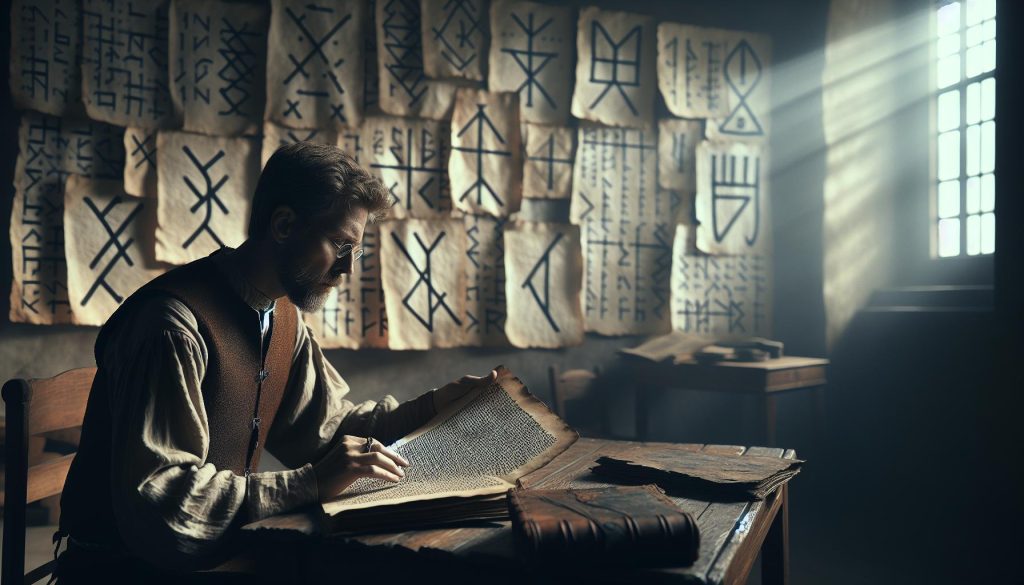
The authorship of “Beowulf,” one of the most celebrated works of English literature, has long intrigued scholars and readers alike. Recent research using stylometric analysis suggests that this epic poem may indeed be the product of a single, skilled author rather than a patchwork of contributions as previously thought. This revelation is significant not only for understanding the poem’s artistry but also for appreciating its cultural and historical context. As we delve into this literary mystery, we’ll uncover the implications of authorship on the themes, stylistic choices, and emotional depth of “Beowulf.” Join us on this exploration, where we will unravel the complexities surrounding one of literature’s enduring enigmas and discover why knowing the author matters in appreciating the full impact of this legendary narrative.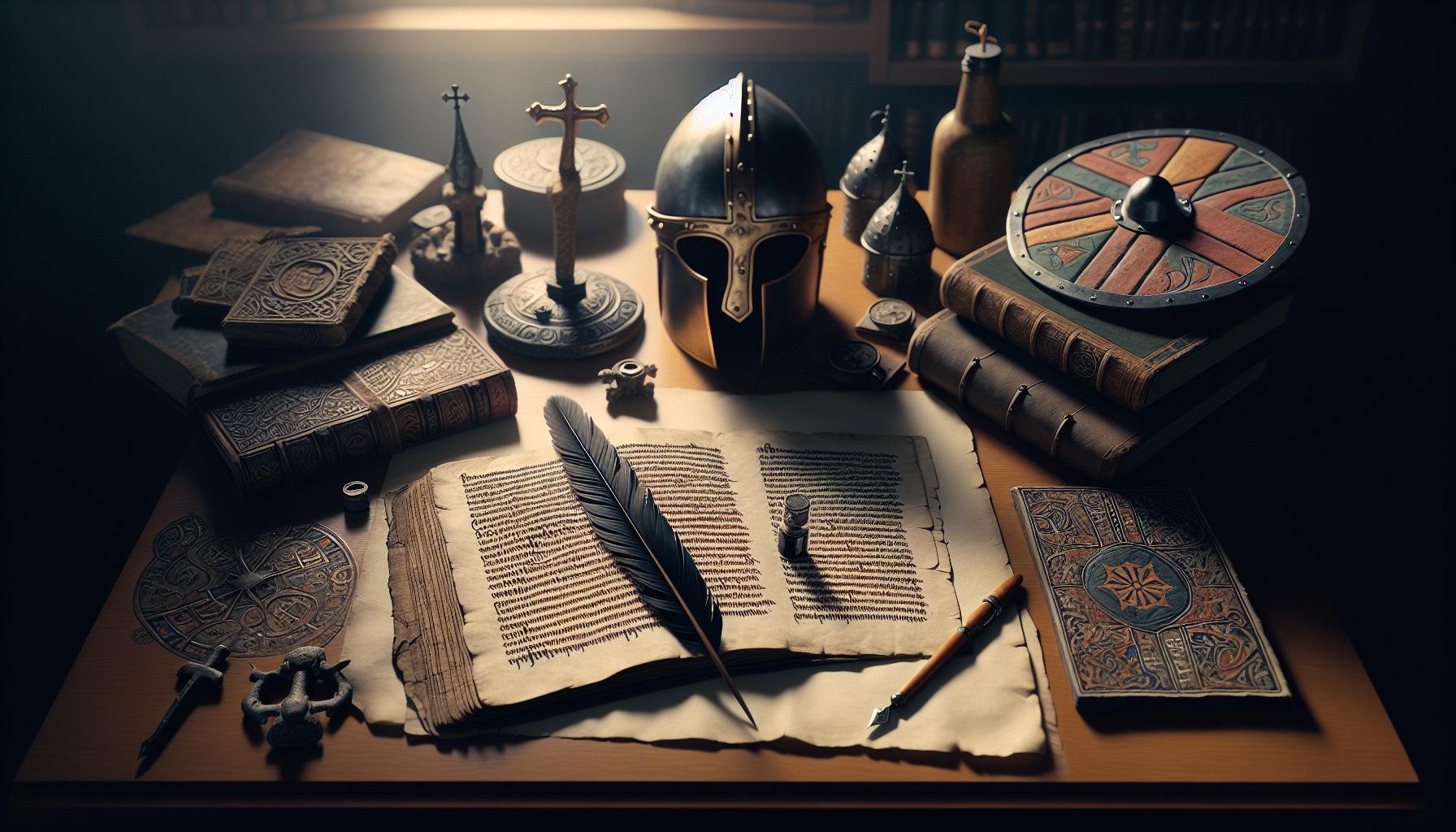
Who Was the Original Poet of Beowulf?
The legendary epic poem Beowulf has captivated readers for centuries, yet the identity of its original poet remains shrouded in mystery. Written in Old English, this work is attributed to an anonymous Anglo-Saxon poet, often referred to as the “Beowulf poet.” Scholars suggest that this poet likely lived during the early 8th century, a period rich in storytelling traditions and cultural transitions in England, following its conversion to Christianity. The poem itself, recounting the heroic feats of its titular character, Beowulf, appears to draw upon oral storytelling traditions, blending both pagan and Christian elements that reflect the socio-religious context of the time [2, 3].
Despite extensive academic inquiry, the specifics of who the poet was, or where they might have lived, elude definitive historical documentation. This anonymity may reflect the oral nature of the storytelling tradition that preceded the poem’s written form. As stories were passed down through generations, individual authorship often became less important than the communal act of storytelling. Additionally, the references to Scandinavian settings and characters indicate a deliberate choice by the poet to connect with his audience through familiar cultural narratives, rather than strictly focusing on local events [1, 2].
The mystery surrounding the author of Beowulf opens discussions about the nature of culture, authorship, and tradition in ancient literature. By remaining anonymous, the poet not only invites readers to focus more on the themes and messages of the poem itself but also allows generations of scholars and enthusiasts to engage in a broader conversation about the poem’s significance. This scholarly engagement turns the author into a symbol of collective human experience, where the stories told transcend individual identity, reinforcing the cultural importance of Beowulf as a shared heritage [3].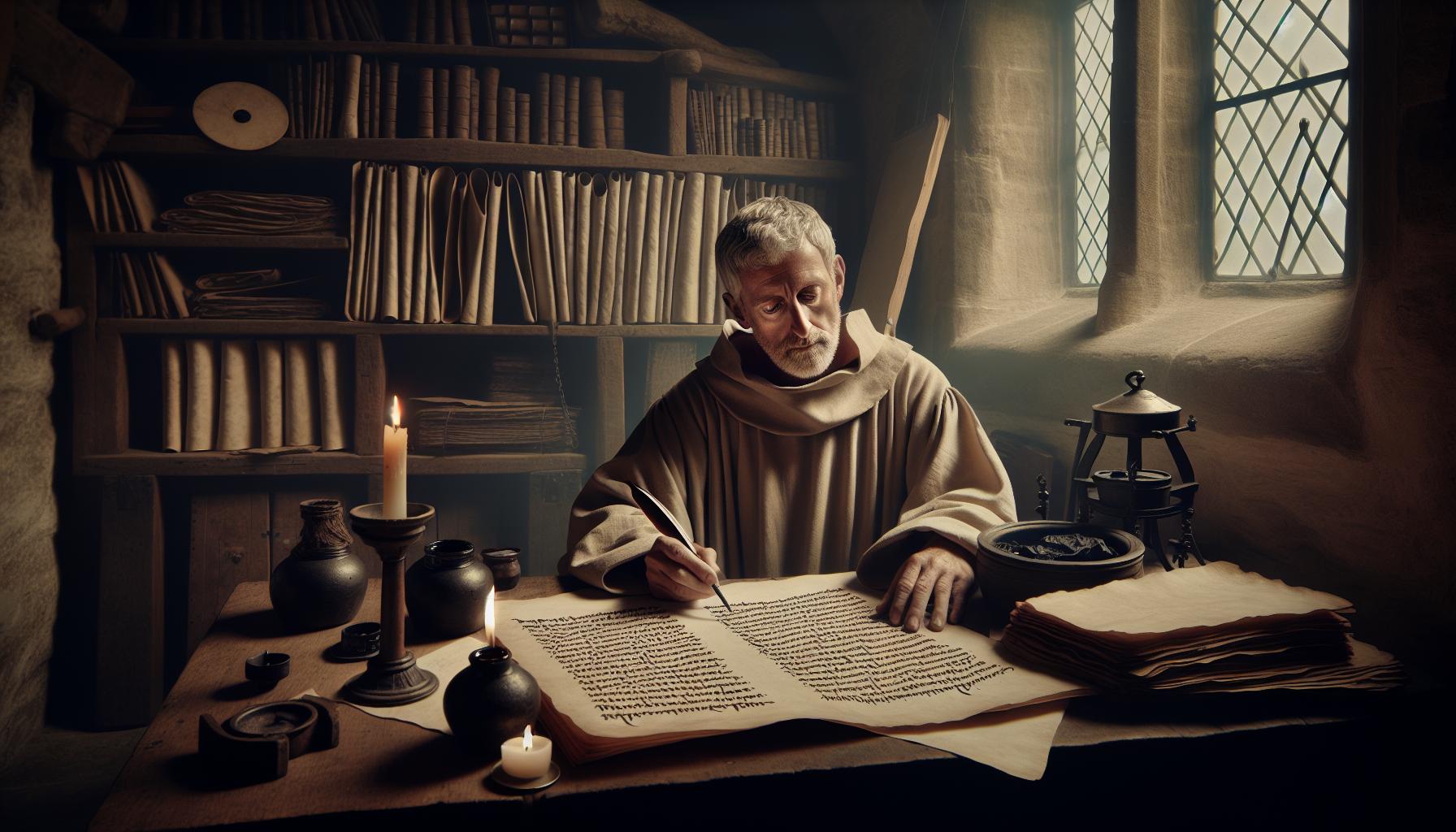
The Historical Context of Beowulf’s Creation
The epic poem Beowulf is more than just a thrilling tale of heroism; it is a reflection of the Anglo-Saxon historical context in which it emerged. Written in Old English, this masterpiece likely dates back to the early 8th century, a time when England was undergoing significant cultural transformations fueled by the spread of Christianity and the remnants of pagan traditions. The convergence of these influences is woven into the very fabric of the narrative, showcasing a society navigating the complexities of faith, loyalty, and the heroic ideal.
Amidst the backdrop of the Anglo-Saxon world, tribal loyalties were paramount, and the warrior culture thrived. The protagonist, Beowulf, embodies these ideals through his battles against formidable foes such as Grendel and his mother, which not only serve as thrilling exploits but also highlight the societal values of bravery, honor, and reputation. In an era where oral tradition was the primary means of storytelling, the Beowulf poet crafted a tale that would resonate with audiences familiar with these cultural narratives, effectively preserving and transmitting these values.
Furthermore, the globalization of narratives, as seen in the poem’s references to Scandinavian settings and characters, reflects a broader cultural exchange during this period. Such elements suggest that the Beowulf poet deliberately connected with an audience that extended beyond local events. This choice indicates a sophisticated understanding of storytelling that sought to unite diverse cultural threads, reinforcing the communal aspect of storytelling that was vital in a largely oral society.
In examining the historical context of Beowulf, it becomes evident that its creation was influenced not only by the poet’s environment but also by the rich tapestry of traditions that shaped early medieval England. The poem serves as a window into this world, encapsulating the ethos of a time when tales of valor and morality were crucial to a community’s identity and survival. By navigating the intersection of history, culture, and storytelling, Beowulf stands as a testament to the enduring nature of human experience, echoing the collective memory of a civilization that valued its heroes and the lessons they imparted.
Unraveling the Anonymity: Why the Author Remains Unknown
The identity of the poet behind Beowulf remains one of the great mysteries of literary history. Despite the poem’s significance and lasting impact, the author is not explicitly named within the text, leaving scholars and enthusiasts alike to ponder the reasons behind this anonymity. One possibility is that the poet belonged to a tradition of oral storytelling, where the emphasis was placed on the collective tale rather than the individual creator. In an era where stories were passed down through generations, the name of the bard may have mattered less than the content of their performance, which was a celebration of cultural values and communal memory.
Moreover, the manuscript containing Beowulf was likely written down by a monk in the late tenth century, centuries after the poem’s composition. This means that even if the original author was known within their community, the transition to written form could have resulted in the loss of crucial identifying details. The manuscript itself-now housed in the British Library-has suffered physical damage over time, further obscuring insights into its origins. Scholar J.R.R. Tolkien famously remarked that Beowulf reflects the voice of a specific time and place, indicating that its anonymity might point to a broader cultural phenomenon rather than a mere oversight.
The allure of the unknown can also enhance the legacy of a work like Beowulf. By not anchoring the poem to a singular figure, it allows for interpretative flexibility; each generation can view the text through its own lens, infusing new meanings and resonances across cultural divides. This notion echoes the communal nature of Beowulf‘s themes-heroism, loyalty, and mortality-making it a timeless reflection of the human experience. Thus, while the poet remains nameless, their creation continues to speak volumes about the society from which it emerged, inviting readers to explore not just the narrative of Beowulf, but the rich cultural tapestry that informs its existence.
Theories About the Author’s Identity: A Comprehensive Overview
Despite being one of the most significant works of literature, the identity of the poet behind Beowulf remains a tantalizing mystery. Over the years, various theories have emerged, each offering a unique perspective on who the author might be and what their motivations could have been. Scholars have proposed multiple possibilities, ranging from the notion of a single author to the idea that the poem was the result of collective contributions from a community of storytellers.
One prominent theory posits that Beowulf was penned by a single author, as recent research employing stylometric analysis suggests. This approach analyzes the poem’s meter, vocabulary, and stylistic features, revealing consistent patterns indicative of a singular voice. Researchers like Krieger and his colleagues support this theory, arguing that such evidence undermines the notion of Beowulf as a compilation of various oral tales [2]. This expands our understanding of the author as possibly an educated individual, likely a monk or cleric, who combined oral storytelling traditions with literary techniques to create a complex narrative.
Another theory suggests that the poet could have been a member of the Anglo-Saxon aristocracy, drawing upon personal experiences, social values, and historical events to craft the epic tale. Given the poem’s themes of heroism, loyalty, and mortality, it’s plausible that the author encapsulated the ideals of their time and culture, contributing to the poem’s enduring relevance [1].
In addition to the debates over individual authorship, the tradition of oral storytelling cannot be overlooked. It’s possible that the poet was part of a larger storytelling community, channeling collective heritage and shared narratives that were pivotal in shaping cultural identity. This communal aspect may explain the poem’s ability to resonate with diverse audiences across generations. The lack of a definitive author amplifies the text’s appeal; it invites readers and scholars alike to interpret it through various lenses, allowing personal and cultural connections to flourish.
Ultimately, the mystery surrounding the author of Beowulf and the various theories about their identity enrich our appreciation of the text. As we delve deeper, not only do we explore the potential influences on the poet, but we also engage with a pivotal piece of literature that reflects the complexity of human experiences across time and culture. The diverse theories invite ongoing exploration and discussion, ensuring that Beowulf remains a central figure in literary studies.
Literary Style and Techniques in Beowulf
One of the striking features of *Beowulf* is its rich tapestry of literary styles and techniques that not only enhance the narrative but also provide insight into the cultural values of its time. The use of alliteration-a hallmark of Old English poetry-creates an almost musical quality, allowing the poem to resonate when recited aloud. For example, the repetition of consonant sounds at the beginning of words in lines like “So. The Spear-Danes in days gone by” invokes a sense of rhythm that was likely instrumental in the oral traditions that preceded its written form.
Alliteration and Kennings
In addition to alliteration, *Beowulf* is characterized by the use of kennings, which are compounded expressions that convey meaning in a metaphorical way. Instead of simply referring to someone as a “king,” the poet might use “ring-giver,” which not only describes the figure’s role but also compliments their generosity and status. These literary devices serve multiple purposes:
- They create vivid imagery that captures the reader’s imagination.
- They reflect the culture’s values, such as loyalty and heroism.
- They help maintain the poem’s rhythm and meter.
For instance, the kenning “whale-road” for the sea not only illustrates the landscape but also evokes the perilous journeys of seafarers in a time rife with maritime adventure.
Theme of Heroism and Morality
The narrative structure of *Beowulf* itself underscores the themes of heroism and morality. The three major battles against Grendel, Grendel’s mother, and the dragon can be viewed as a progression that mirrors the hero’s journey-a universal motif found in narratives across cultures. Each confrontation becomes a testament to Beowulf’s physical prowess as well as his moral courage. The poet does not merely celebrate physical strength; he reflects on the hero’s responsibility to his people, showcasing a complex characterization that allows readers to engage with their own notions of heroism.
Imagery and Symbolism
Moreover, the vivid imagery and symbolism throughout the poem serve to deepen its meaning. Light and darkness often symbolize the contrast between good and evil, with Grendel and his descendants representing the latter. The references to fire-particularly in the dragon’s scenes-also symbolically align with destruction and greed, framing the existential threats that heroes must face. These layers of meaning cultivate a texture that invites readers to explore not just the narrative but also the ethical questions posed by the actions and fates of its characters.
In summary, the literary style and techniques in *Beowulf* are not only crucial for storytelling but also act as a lens through which readers can examine the values and beliefs of the Anglo-Saxon period. By employing alliteration, kennings, and a rich thematic interplay between heroism and moral complexity, the author crafts a compelling narrative that continues to resonate with contemporary audiences. These elements invite exploration and reflection, ensuring that *Beowulf* remains a vital text in the study of literature and cultural history.
The Significance of Oral Tradition in Beowulf
The roots of Beowulf are deeply intertwined with oral tradition, a practice that shaped not only the ways stories were told but also the content and structure of the narratives themselves. Before Beowulf was committed to parchment, it circulated as an oral tale, passed from one skilled storyteller to another. This method of transmission relied heavily on memory, rhythm, and repetition, which are characteristic of oral poetry. The use of alliteration, a defining feature of Beowulf, would have aided performers in recalling the lines and engaging their audience. Such devices not only provided a memorable structure but also emphasized the poetic quality of the storytelling, inviting listeners to immerse themselves in the narrative vividly.
Elements of Oral Tradition
The oral tradition encompasses various elements that resonate throughout Beowulf. For instance, the use of formulas-repetitive phrases or structures that make up verses-affords poets an easier way to compose on the spot during performances. Lines such as “Then the mighty warrior” or “In the days of yore” serve not just as placeholders but also evoke specific imagery and themes consistent with the heroic narrative. Additionally, the kennings-those compound poetic expressions like “whale-road” for the sea-also reflect oral tradition’s reliance on metaphorical language which stimulates the imagination and paints vivid pictures for listeners.
Community and Cultural Values
Oral tradition also emphasizes the cultural values of the community. As Beowulf recounts the adventures of its eponymous hero, it reflects the ideals of bravery, honor, and loyalty revered in Anglo-Saxon society. These stories served a communal purpose; they were not just entertaining but also educational, instilling shared values and morals among listeners. In this light, storytelling becomes a communal act that reinforces identity and unity within the society. Heroic legends, such as those of Beowulf, would have served as ideal models for behavior, encouraging listeners to emulate these traits in their own lives.
An intriguing aspect of the transition from oral to written form is the preservation and adaptation of Beowulf. As oral traditions evolved with the advent of writing, the text we read today may encapsulate centuries of storytelling practices. Scholars have noted that Beowulf not only preserves the heroic tales but also blends Christian elements with older pagan ones, reflecting the transitional culture of the Anglo-Saxons during its written consolidation. This fusion speaks to the oral tradition’s adaptability and resilience, as it absorbed and reflected the societal shifts occurring during the time.
Overall, the significance of oral tradition in Beowulf cannot be overstated. It shaped not only the structure and style of the poem but also allowed it to serve as a cultural artifact, preserving the values and beliefs of a society long past while continuously engaging modern readers in its enduring legacy.
Exploring Beowulf’s Cultural and Historical Influences
The enduring allure of Beowulf lies not only in its thrilling narrative but also in the rich tapestry of cultural and historical influences that shaped it. This epic poem emerges from a specific socio-political landscape of early medieval England, crafted during a time when the Anglo-Saxons were navigating the complexities of their identities amidst the influences of both pagan and Christian traditions. Understanding the context of its creation enhances our appreciation of this literary masterpiece and offers insights into the author’s worldview.
During the 8th century, when Beowulf was likely composed, Anglo-Saxon England faced a pivotal transformation following its gradual conversion to Christianity. The interplay between pagan heroic ideals-such as valor, loyalty, and glory-and Christian values of faith, redemption, and humility is evident throughout the poem. This synthesis reflects the cultural transitions of the era. For instance, Beowulf’s battles against monstrous foes can be seen as more than mere adventures; they symbolize the struggle between good and evil, a central theme in Christian theology. The hero’s journey transcends his physical feats, embodying the moral complexities of his time.
The poem’s linguistic style also mirrors its cultural heritage. Written in Old English, laden with alliteration and kennings, Beowulf is steeped in the oral tradition of storytelling. The use of metaphorical phrases like “whale-road” for the sea not only showcases the richness of Anglo-Saxon language but also reflects the importance of community and shared history in a society that valued oral narratives. Such expressions connect listeners with their heritage, reminding them of their roots while emphasizing the communal aspect of storytelling, where shared tales help reinforce social cohesion.
Furthermore, the influences from other cultures-particularly Scandinavian myths and legends-are evident in the narrative. The poem draws on heroic traditions found in Norse sagas, potentially illustrating trading connections or cultural exchanges between the Anglo-Saxons and their Norse neighbors. This cross-cultural engagement enriches Beowulf, allowing it to serve as a bridge between different historical narratives and traditions, thus making it a key text for understanding the broader tapestry of early medieval Europe.
The cultural and historical influences that permeate Beowulf not only enhance our understanding of its themes and characters but also highlight the complexities of identity that the original poet may have grappled with. They provide a dynamic backdrop against which the heroic tale unfolds, inviting modern readers to explore the resonance of these age-old struggles in our own lives.
Connections Between Beowulf and Other Epic Poems
Beowulf stands as one of the crowning jewels of epic literature, its themes and characters resonating with those found in other prominent epic poems like Homer’s Iliad and Odyssey, as well as Virgil’s Aeneid. Each of these works explores the heroic ideal through the lens of their respective cultures, weaving intricate narratives that reflect ideals such as honor, bravery, and the struggle against fate. Despite the differences in cultural context and narrative style, the connections between these epics reveal a shared human experience of grappling with conflict and the quest for identity.
One significant parallel between Beowulf and these classics lies in their protagonists, who face formidable challenges that test their character and skills. Beowulf, much like Achilles and Aeneas, embodies the qualities of a true hero: strength, courage, and a dedication to his people. For instance, Beowulf’s encounters with Grendel, Grendel’s mother, and the dragon mirror Achilles’ battles against Hector and the Trojans, revealing a fundamental aspect of heroism-the willingness to confront overwhelming odds for the sake of glory and duty.
Additionally, the structure and themes of these epics often reflect a deep interconnection through their reliance on fate and divine intervention. In Beowulf, the hero’s journey is frequently influenced by fate (or wyrd), a concept that resonates with the Greek notion of fate seen in the struggles of Odysseus as he navigates the trials set before him by gods and monsters alike. Similarly, Aeneas is guided by divine prophecy and destiny, emphasizing a divinely sanctioned purpose in his endeavors to found Rome. This shared motif of fate fostering a journey of growth and transformation is a universal theme that transcends cultural boundaries.
Thematic Connections
Thematically, these epics also engage with the idea of legacy and the quest for immortality through one’s deeds. Beowulf’s legendary battles and his ultimate sacrifice for his kingdom echo the aspirations of Achilles to be remembered for his exploits, as both heroes grapple with their mortality. This exploration of legacy serves not just as motivation for the characters but also invites readers to consider their own lives and the marks they leave on the world.
Literary Techniques
Moreover, the literary techniques used, such as the reliance on oral tradition and alliteration in Beowulf, find parallels in the epics of Homer and Virgil through their rich, rhythmic language and formulaic expressions that enhance the flow of storytelling. The use of epithets in Homer’s works, such as “swift-footed Achilles,” can be compared to the descriptive kennings found in Beowulf, like “whale-road” for the sea. These stylistic similarities not only highlight the oral roots of storytelling but also reinforce the significance of language in establishing cultural identity.
In exploring these connections, readers gain a fuller appreciation for not only Beowulf but also the broader tradition of epic poetry. Each work, while unique in its cultural context, contributes to an ongoing dialogue about heroism, identity, and the human condition-a testament to the power of narrative across time and space.
The Role of Manuscripts in Understanding Beowulf
The only surviving manuscript of Beowulf, known as the Nowell Codex, serves as a vital window into the history and complexity of this epic poem. Housed in the British Library, this single manuscript is dated to the early 11th century but encapsulates narratives and themes that reflect earlier oral traditions, suggesting the poem itself may have been composed much earlier, possibly in the 8th century. Understanding the role of this manuscript not only informs us about the text itself but also sheds light on the cultural dynamics of the time.
One intriguing aspect of the Nowell Codex is its extensive annotations and corrections, indicating meticulous care by its scribes over the centuries. This attention to detail supports the argument that Beowulf was valued as a significant cultural artifact. Scholars have noted how the second scribe took great pains in proofreading the Beowulf text, yet neglected other parts of the codex, suggesting that he recognized the poem’s unique importance, potentially even as an original composition rather than a mere copy of prior works [2]. Such insights lead to fascinating discussions about the transcription practices of medieval scribes and how these practices influenced the preservation of literary works.
Moreover, examining the manuscript’s physical attributes reveals information about the socio-political climate of the time. The language used-Old English-and the narrative style, with its reliance on alliteration and kennings, illustrate the blending of Anglo-Saxon culture with Christian themes emerging from the era of English conversion to Christianity. This aligns with evidence suggesting that the author, likely an Anglo-Saxon poet, was steeped in both pagan traditions and the new Christian faith [3]. The manuscript thus acts as a cultural touchstone that allows us to explore the transitions in belief systems and societal values in early medieval England.
In essence, manuscripts like the Nowell Codex are more than mere containers of words; they are rich historical documents that offer clues about authorship, cultural narratives, and the preservation of literary heritage. By studying these elements, we gain a deeper appreciation of Beowulf not only as a story of heroism and adventure but also as a reflection of the world in which it was created and preserved. The intricate interplay between Beowulf and its manuscript allows readers to better understand the poem’s legacy and the ongoing debates surrounding its authorship.
Impact of Beowulf on Modern Literature and Culture
The enduring legacy of Beowulf resonates profoundly in modern literature and culture, shaping storytelling in ways that extend far beyond the confines of its Old English roots. With its themes of heroism, the struggle against monstrous foes, and the quest for glory, this epic poem has inspired countless writers across diverse genres. The archetypes presented in Beowulf, from the brave hero confronting evil to the tragic downfall of flawed leaders, echo in contemporary works, establishing a lineage of influence that includes modern fantasy, horror, and even mainstream adult fiction.
One striking example of Beowulf’s impact can be seen in J.R.R. Tolkien’s legendary works, particularly The Hobbit and The Lord of the Rings. Tolkien, who was an expert in Old English literature, infused his narratives with the same sense of grand adventure and moral complexity that characterizes the original poem. In fact, during his academic career, Tolkien argued for Beowulf’s importance in understanding the roots of English storytelling, a sentiment that has echoed throughout scholarly discourse. The notion of a noble hero facing insurmountable odds and ultimately triumphing, though often at great personal cost, becomes a recurring motif in modern storytelling, underscoring Beowulf’s influence.
Furthermore, the incorporation of Beowulf’s themes into popular culture is evident in films, video games, and even graphic novels. Movies such as Beowulf (2007) and adaptations that draw on its plot structures and character types highlight the poem’s relevance and adaptability. Video games like Dark Souls also reflect Beowulfian themes, introducing players to complex characters who embody the hero’s journey, courage in the face of dire consequences, and the exploration of mortality. These modern interpretations allow audiences to reconnect with the mythic narrative style and ethical dilemmas portrayed in the poem, demonstrating how ancient stories retain their importance in contemporary settings.
In literature classrooms worldwide, Beowulf continues to spark discussion and debate, particularly around topics of authorship and cultural legacy. The exploration of who wrote Beowulf-or if it even had a singular author-opens up a broader dialogue about the nature of storytelling and the communal aspect of creation. Such discussions promote an understanding of how narratives evolve over time and can be reinterpreted to fit new cultural contexts. As readers engage with the poem’s themes of heroism, honor, and mortality, they tap into a universal human experience that transcends time and invites endless exploration, ultimately enriching both modern literature and cultural identity.
Debates in Academia: Authorship of Beowulf Revisited
The question of who penned the epic poem Beowulf continues to stir considerable intrigue and debate among scholars, with various theories cast against the backdrop of literary history. While many agree that it was likely authored by an Anglo-Saxon poet in the 8th century, this assertion opens the door to discussions about the social and cultural landscape in which the work was created, as well as the methodologies employed in attempts to ascertain authorship.
The epic’s roots are steeped in a mixture of pagan and Christian traditions, suggesting the poet was navigating between these worldviews during a time of significant transition in England. Scholars like J.R.R. Tolkien have championed the idea that Beowulf is a unified work crafted by a single author, arguing against the notion that it emerged from oral traditions without a coherent literary voice [1]. This perspective aligns with more recent literary analyses and even computer-aided studies that indicate stylistic and thematic consistency throughout the poem, suggesting it was not merely a product of collective storytelling but rather the vision of an individual artist.
In contrast, other academics, such as the historian Kevin Kiernan, have posited that the poem may not have been written until the 11th century, indicating that the surviving manuscript is a unique composition rather than a copy of an earlier text [2]. This brings into question not just the date of authorship but also the potential for multiple layers of oral tradition intertwining with the written word, reminding us that texts like Beowulf often reflect evolving cultural narratives.
Debates in academia surrounding the authorship of Beowulf rarely settle into neat conclusions. Instead, they perpetuate a vibrant discourse that highlights how our understanding of literary creation is fundamentally tied to the historical context of its emergence. As readers and scholars engage with this poem, they unravel not just its storyline of heroism and epic battles, but also the very nuances of its creation, raising questions about identity, culture, and the nature of storytelling itself. Such dialogues ensure that Beowulf remains not just a relic of the past but a living text that invites new interpretations and insights across generations.
How the Mystery of Beowulf’s Author Enhances its Legacy
The enduring mystery surrounding the authorship of Beowulf significantly enhances its cultural legacy, capturing the imagination of readers, scholars, and creative artists alike. The poet remains anonymous, a fact that adds an air of intrigue to the epic, inviting diverse interpretations and encouraging exploration of its themes and historical context. This lack of a definitive author allows Beowulf to transcend individual identity, transforming it into a universal emblem of heroic narrative and cultural discourse.
A key aspect of this mystery lies in the poem’s rich interweaving of both pagan and Christian elements, reflecting a time of profound transition in England. The ambivalence of the author’s identity encourages readers to ponder the historical forces that shaped the text. Was the poet intentionally obscuring his identity to connect with a broader audience or to comment on the fragility of legacy in the face of changing belief systems? Such questions deepen the reader’s engagement with the text, transforming Beowulf into a living dialogue between past and present.
Moreover, modern technological methods, such as stylometry, have revived discussions about the authorship debate, as researchers analyze the poem’s linguistic features for evidence of a single authorial voice. This new lens adds depth to the conversation, showing how the mystery is not just a puzzle for scholars but a dynamic arena for inquiry that bridges literary analysis and quantitative research. The evolving theories regarding its authorship keep the discussion vibrant and relevant, encouraging new generations of readers to explore Beowulf afresh.
In essence, the unknown author of Beowulf does not diminish its significance; rather, it enriches it. Readers are invited not only to immerse themselves in the grandeur of the tale but also to consider the complex tapestry of influences, motivations, and cultural shifts that brought this masterpiece into being. As Beowulf continues to inspire countless retellings and adaptations, its legacy remains a testament to the power of storytelling that transcends time and individual identity, captivating audiences across centuries.
Frequently Asked Questions
Q: What do we know about the historical context of the author of Beowulf?
A: The author of Beowulf is believed to have lived during a time when Anglo-Saxon culture flourished, possibly in the 8th to 11th centuries. This period was characterized by a rich oral tradition, and the poet may have been influenced by both Christian and pagan themes prevalent in the society [[1]].
Q: Why is the identity of the Beowulf poet still debated among scholars?
A: Scholars debate the identity of the Beowulf poet due to the poem’s anonymous nature and the historical lack of documentation about individual authors in the early medieval period. Theories suggest the poet was possibly a monk or a collective group of poets in an Anglo-Saxon court [[2]].
Q: How did oral tradition impact the authorship of Beowulf?
A: Oral tradition significantly impacted Beowulf’s authorship as it was likely passed down orally before being written. This method of storytelling influenced the poem’s structure, language, and themes, allowing for variations and adaptations before its eventual manuscript form [[2]].
Q: What theories exist about the potential authors of Beowulf?
A: Theories about the authorship of Beowulf suggest it could have been written by a single poet or multiple contributors, including learned monks or poets from the Anglo-Saxon era. Each theory reflects the cultural and literary exchanges of the time, making it a subject of ongoing academic investigation [[1]].
Q: What are the literary styles evident in Beowulf?
A: Beowulf exhibits various literary styles including alliteration, kenning, and enjambment, reflecting the oral tradition’s influence. These techniques enhance the rhythmic quality of the poem and create a rich, immersive storytelling experience that deepens its impact and meaning [[2]].
Q: How does the mystery of Beowulf’s authorship enhance its literary significance?
A: The anonymity of Beowulf’s author contributes to its literary significance by inviting diverse interpretations and analyses. This mystery encourages readers and scholars alike to explore its themes, cultural context, and influence on later literature, enriching the poem’s legacy [[2]].
Q: Does Beowulf’s author provide any insights into its cultural influences?
A: Yes, while the author remains unknown, Beowulf showcases a blend of Christian and pagan influences, reflecting the historical milieu of Anglo-Saxon society. This synthesis offers valuable insights into the cultural tensions and transitions of its time [[1]].
Q: What role do manuscripts play in understanding Beowulf’s authorship?
A: Manuscripts of Beowulf serve as crucial evidence for understanding its authorship and historical context. They provide insights into the poem’s preservation, textual variations, and the scholarly interpretations that have shaped its study over centuries, thereby highlighting the importance of manuscript culture [[2]].
To Wrap It Up
As we unravel the enigma surrounding the authorship of “Beowulf,” it’s clear that this timeless tale offers more than just heroic deeds; it opens a window into the culture and values of its time. Understanding the potential authors and their context not only enriches your reading experience but also deepens your appreciation for this epic narrative. If you found this exploration intriguing, don’t miss out on our related articles, such as “The Impact of Oral Tradition on Beowulf” and “Exploring the Themes of Honor and Valor,” which delve deeper into the elements that shape this classic work.
Is the mystery of “Beowulf” still haunting your thoughts? Dive into our comprehensive resources to continue your journey through its rich symbolism and historical significance. We encourage you to subscribe to our newsletter for insightful literary analyses and updates on our latest content. Together, let’s keep the conversation going-share your thoughts below or connect with us on social media! Your engagement not only fuels our passion for literature but also fosters a community of fellow enthusiasts eager to share insights and ideas.
Get our latest guides, news, and insights highlighted in your Google Search & AI Overviews.