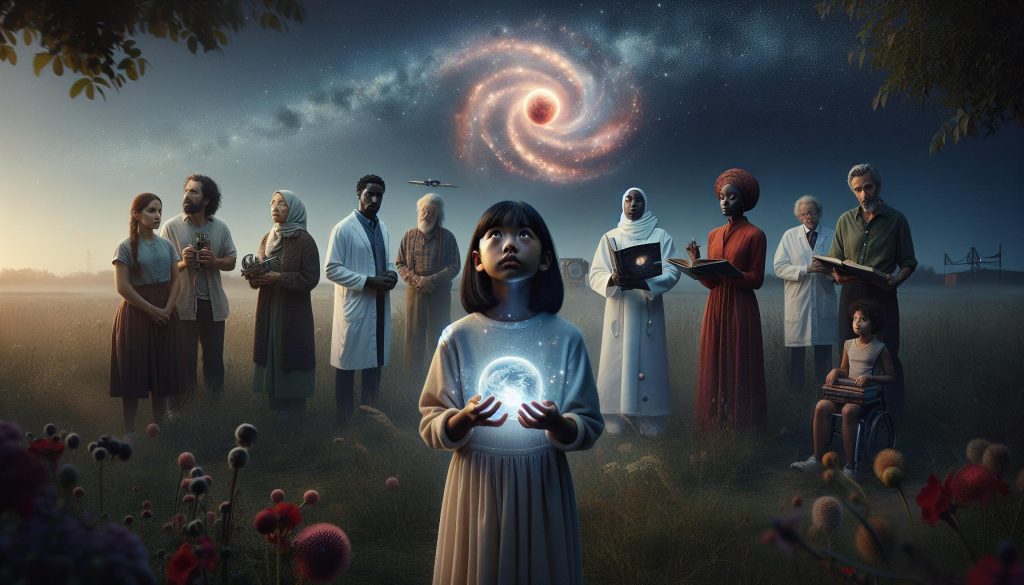
In the realm of children’s literature, few titles resonate as profoundly as “A Wrinkle in Time” by Madeleine L’Engle. This groundbreaking novel deftly intertwines science fiction and fantasy, exploring complex themes such as the battle between good and evil, the power of love, and the value of individuality. By delving into the adventures of Meg Murry and her companions as they traverse time and space, readers are not only entertained but also invited to reflect on their own struggles with self-acceptance and resilience. Understanding the multifaceted themes and literary elements in this work enriches the reading experience, sparking conversations that transcend generations. Join us as we unpack the layers of meaning within “A Wrinkle in Time,” revealing insights that are as relevant today as they were upon its initial release. Your journey into this captivating world awaits, promising both challenge and inspiration at every turn.
Themes Explored in “A Wrinkle in Time
In “A Wrinkle in Time,” Madeleine L’Engle weaves a rich tapestry of themes that resonate deeply with readers of all ages. Central to the novel is the conflict between good and evil, exemplified by the struggle against the dark force known as IT. This theme unfolds through the journey of Meg Murry and her companions as they traverse space and time to rescue her brother, Charles Wallace. The stark contrast between characters who embody love, such as Meg and Mrs. Whatsit, and the oppressive force of IT illustrates the narrative’s moral stakes. Importantly, it is Meg’s realization that love is a powerful weapon against evil that ultimately leads to her triumph, showcasing love’s essential role in the fight against darkness [1].
Another significant theme is the importance of individuality and self-acceptance. Throughout the story, characters who initially struggle with their self-image learn to embrace their unique qualities. For Meg, her insecurities about her appearance and intelligence become focal points, yet they also serve as catalysts for her growth. As she journeys into the unknown, she discovers that accepting herself is integral to harnessing her inner strength. This theme underscores the notion that true bravery stems from understanding and loving oneself, a message that resonates well with young readers grappling with their identities [3].
Lastly, L’Engle explores the power of love and the bonds of family. The relationship between Meg and Charles Wallace, characterized by deep sibling love, propels the narrative forward. Their familial ties serve not only as emotional anchors but also as a reminder of humanity’s capacity for compassion amidst galactic turmoil. L’Engle illustrates that love can manifest in various forms, be it familial, platonic, or universal, and is central to overcoming obstacles that seem insurmountable. By framing love as a guiding force, “A Wrinkle in Time” encourages readers to recognize the strength found in connection with others, urging them to cultivate love in their own lives for personal and collective empowerment [2].
These profound themes collectively contribute to the novel’s lasting impact, inviting readers to reflect on their personal experiences and the broader human condition as they journey alongside Meg and her allies.
Character Analysis: Key Figures in the Story

In “A Wrinkle in Time,” the character dynamics drive the intricate narrative, revealing profound themes of love, individuality, and the struggle against evil. Each key figure not only shapes the plot but also embodies essential qualities that resonate with readers, making the story both relatable and timeless.
Meg Murry, the protagonist, serves as the heart and soul of the journey. A thirteen-year-old girl grappling with feelings of inadequacy and alienation, Meg’s character development reflects the challenges many young readers face in their quest for self-acceptance. Her resilience, paired with her struggle against societal expectations and her own inner demons, allows readers to empathize with her journey toward embracing her true self. Throughout the narrative, her love for her brother Charles Wallace becomes the catalyst for her growth, illustrating how deep familial bonds can provide strength in the face of adversity.
Charles Wallace, Meg’s younger brother, is portrayed as a unique and gifted individual-intellectually advanced yet socially misunderstood. His character challenges conventional metrics of intelligence, and his struggles highlight the importance of understanding and valuing differences. Often quiet and introspective, Charles confronts the darkness in ways that complement Meg’s emotional approach. Throughout their journey, his intuitive insights and connection to the universe emphasize the theme that intellectual agility is powerful, especially when coupled with love and bravery.
The trio of Mrs. Whatsit, Mrs. Which, and Mrs. Who introduces elements of wisdom and guidance, serving as mentors to the Murry children. Each has distinct characteristics that contribute to the overall narrative. Mrs. Whatsit embodies playfulness and warmth, representing the nurturing aspect of love; Mrs. Which, with her authoritative demeanor, symbolizes strength and determination; and Mrs. Who, known for her use of quotations, illustrates the limitations of language in conveying complex ideas. Together, they reinforce the notion that love and guidance come from various sources, enriching the characters’ journey and the readers’ experience.
Through these characters, L’Engle masterfully explores themes of love, individuality, and the innate strength found within family ties. The emotional interplay among Meg, Charles, and their celestial mentors imparts valuable lessons about resilience, the power of connection, and the necessity of embracing one’s unique traits-a narrative that continues to resonate with readers of all ages.
The Role of Science and Fantasy

Imagining travel through the cosmos, where the laws of time and space bend and shift, is a compelling aspect of A Wrinkle in Time. Madeleine L’Engle deftly blends science and fantasy, creating a rich narrative landscape that invites readers to explore profound truths about the universe and themselves. This unique amalgamation serves not only as a backdrop but also as a vehicle for character development and theme exploration within the story.
At the heart of this interplay is the concept of tesseracts, or “wrinkles” in time that allow for instant travel across vast distances. This idea, inspired by real scientific theories such as Einstein’s theory of relativity, encourages readers to contemplate the nature of time and space. Through Meg, Charles Wallace, and their friends embarking on interstellar journeys, L’Engle illustrates how scientific concepts can intersect with human experience. The characters’ adventures into alternate universes serve as metaphors for personal growth and understanding, edging readers to think critically about their own reality. The integration of theoretical physics enhances the narrative while positioning science as not just a subject but a means of unlocking deeper existential questions.
Yet, L’Engle does not merely use science for the sake of it; she envelops these concepts within fantastical elements that resonate with young readers. The celestial beings-Mrs. Whatsit, Mrs. Which, and Mrs. Who-introduce fantastical wisdom that guides Meg and Charles through their challenges. Their abilities to manipulate time and dimensions emphasize that while the scientific is rooted in logic, the fantastical allows for the exploration of hope, love, and courage. This synthesis encourages readers to embrace their curiosity about complex scientific principles while nurturing their imagination.
In essence, the dual lens of science and fantasy not only enriches A Wrinkle in Time but also serves to illuminate the story’s central themes of individuality, love, and the struggle against darkness. By presenting these complex ideas in an accessible manner, L’Engle empowers readers to ponder significant questions about existence and personal identity, fostering a sense of wonder that inspires lifelong learning-be it through scientific inquiry or imaginative exploration.
Symbolism and Metaphors in the Narrative
The narrative of A Wrinkle in Time is rich with symbolism and metaphor, weaving complex themes into a tapestry that resonates with both young readers and adults alike. One of the most prominent symbols throughout the story is the concept of light versus darkness. Light represents goodness, hope, and love, while darkness symbolizes evil, oppression, and despair. This fundamental duality captures the ongoing battle between positive and negative forces in the universe, prompting readers to reflect on their personal struggles against adversity and the importance of choosing love over hatred.
Another crucial metaphor is the tesseract itself, representing a sort of dimensional travel that serves as a gateway for exploration beyond the conventional boundaries of time and space. The tesseract symbolizes the potential for personal growth and transformation. Just as the characters journey through these ‘wrinkles in time,’ they too must navigate their own paths toward self-discovery and understanding, ultimately learning that their inner strength can overcome external challenges. This resonates particularly with the journey of Meg Murry, who must grapple with her insecurities and her understanding of herself to confront the malevolent forces threatening her loved ones.
The roles of Mrs. Whatsit, Mrs. Who, and Mrs. Which as celestial guides further enrich the narrative with layered meanings. These characters embody wisdom and represent facets of nurturing and insightful parental figures. Their guidance signifies the importance of relationships and collective strength in overcoming obstacles, illustrating that one does not have to face their struggles alone. Furthermore, Mrs. Who’s use of quotes from literature and philosophy encourages readers to recognize the intrinsic link between knowledge and empowerment, reinforcing the concept that wisdom often comes from understanding oneself and the world.
In addition to individual symbols and metaphors, the overarching journey through space and time can be seen as an allegory for the human experience itself-replete with travel through moments of joy, pain, confusion, and clarity. L’Engle’s masterful use of these literary devices not only enhances the narrative but also invites readers to engage in critical thought about their own identities and choices in the face of adversity. Thus, A Wrinkle in Time stands as a profound exploration of love, resilience, and the eternal conflict between light and darkness, encouraging readers to ponder the significant questions of existence and their personal journeys.
Structure and Narrative Techniques
The intricate employed in *A Wrinkle in Time* forge a compelling reading experience, reflecting the complexity of its themes and characters. L’Engle intertwines various elements, such as time travel and parallel universes, with an engaging narrative style that both captivates and challenges readers. The book’s innovative approach invites exploration of profound philosophical concepts while leveraging a youthful perspective that resonates well with its target audience.
One of the primary narrative techniques L’Engle uses is the blending of dialogue, internal monologue, and descriptive passages. This dynamic interplay allows readers to experience characters’ thoughts and feelings intimately. For example, Meg Murry’s internal struggles with self-identity and her connection to love are depicted through her reflective thoughts, expressed vividly alongside her interactions with other characters. Such a combination offers a deeper layer of understanding and empathy, engaging readers in Meg’s transformative journey.
Non-linear Time Structure
The non-linear progression of time, achieved through the concept of the tesseract, serves as a significant structural element. Rather than following a traditional chronological order, the narrative skips across different dimensions and timelines, constructing a framework where time is fluid. This technique not only symbolizes the central theme of the journey through love and darkness but also mirrors the characters’ emotional growth and struggles. As they traverse these ‘wrinkles in time’, the progression reveals the interconnectedness of their experiences and choices.
Use of Fantasy Elements
Fantasy plays a crucial role in the narrative structure of *A Wrinkle in Time*. The incorporation of fantastical elements such as Mrs. Whatsit, Mrs. Who, and Mrs. Which, introduces an ethereal quality that blurs the lines between reality and imagination. These characters serve not only as guides but also symbolize different aspects of knowledge and wisdom, emphasizing L’Engle’s belief in the importance of mentorship and intellectual growth. The fantastical setting prods readers to question the limitations of their reality, thereby enriching their understanding of the physical and emotional battles depicted in the story.
Finally, L’Engle’s strategic chapter breaks and cliffhangers maintain narrative tension, encouraging readers to follow the Murrys’ adventure with eager anticipation. The pacing effectively balances action with reflective moments, creating a rhythm that enhances the emotional impact of the characters’ tribulations. This structural choice reinforces the book’s central themes of resilience and love, reminding readers that amidst the chaos of external challenges, internal growth plays a pivotal role in overcoming adversity.
By employing these varied narrative techniques, *A Wrinkle in Time* not only captivates the imagination but also challenges readers to contemplate larger existential questions, ultimately making it a timeless piece of literature worthy of analysis and discussion.
Comparative Literature: Similar Themes
Exploring the intricate themes in A Wrinkle in Time invites readers to consider how similar motifs appear throughout literature. Many authors have tackled universal themes like the struggle between good and evil, the power of love, and the importance of individuality versus societal conformity. Each of these narratives can shed light on L’Engle’s work, allowing readers to draw parallels and distinctions that enhance their understanding.
One vivid example is C.S. Lewis’s The Chronicles of Narnia, particularly The Lion, the Witch and the Wardrobe. Both series feature characters who must confront their fears and make pivotal choices in their battles against evil forces. In Narnia, Aslan embodies love and sacrifice, mirroring the role of love in A Wrinkle in Time, where it is portrayed as the ultimate weapon against darkness. This shared thematic element emphasizes how love transcends all boundaries, influencing characters’ journeys in both series.
Similarly, J.K. Rowling’s Harry Potter series explores themes of friendship, bravery, and the fight against oppressive forces. The development of Hermione, Harry, and Ron parallels Meg, Charles Wallace, and Calvin’s growth as they face overwhelming odds together. The friendships in each story highlight the importance of solidarity and loyalty, reinforcing that support and love are essential in overcoming adversities.
Furthermore, the theme of nonconformity resonates deeply in both L’Engle’s work and in Ray Bradbury’s Fahrenheit 451. In A Wrinkle in Time, Meg’s journey towards self-acceptance and her defiance against societal expectations remind readers of Montag’s awakening in Bradbury’s dystopian world. Both protagonists challenge the status quo in their respective narratives, emphasizing the necessity of individual thought in the face of conformist pressures.
These works enrich A Wrinkle in Time’s reading experience by demonstrating how themes of love, friendship, nonconformity, and the struggle against evil are not isolated but part of a larger literary conversation. Engaging with these texts can deepen one’s appreciation for L’Engle’s storytelling while encouraging readers to reflect on the powerful messages that literature imparts across different contexts and settings.
Impact of “A Wrinkle in Time” on Young Readers
The profound impact of *A Wrinkle in Time* on young readers extends far beyond its imaginative plot and colorful characters. This classic novel by Madeleine L’Engle introduces children and adolescents to complex themes such as love, individuality, and the battle against conformity, providing them with essential tools to navigate their own lives. By engaging with these themes, young readers are often prompted to reflect on their values, relationships, and understanding of the world around them.
- Empowerment through Individuality: Meg Murry, the protagonist, embodies the struggle for self-acceptance. Her journey teaches young audiences that embracing one’s uniqueness is vital. This message empowers readers to resist peer pressure and societal norms, fostering confidence in their identity and personal choices.
- Understanding Love as Strength: The theme of unconditional love showcased in the book emphasizes its transformative power against darkness, serving as an essential lesson for young readers. They learn that love can act as a protective force, encouraging them to cherish their own relationships and recognize the strength derived from a supportive community.
- Critical Thinking and Questioning: L’Engle’s work challenges young readers to question authority and the status quo, instilling a sense of curiosity about their surroundings. Characters such as Charles Wallace demonstrate the importance of intelligence and insight, inspiring readers to think critically and develop their perspectives on complex issues.
Young readers often find themselves inspired by the adventures within the book, leading to personal growth and development. By confronting evil and embracing their inner strengths, they learn that obstacles can often be overcome through resilience and teamwork. This overarching message not only promotes emotional intelligence but also cultivates problem-solving skills that youngsters can apply in real life.
In addition, *A Wrinkle in Time* induces a love for reading, as its captivating narrative encourages young readers to explore other literary works that delve into similar themes. The book serves as a gateway to discussing larger societal issues, prompting group conversations in classrooms and homes alike. By bridging personal experiences with literary themes, young readers can draw connections that deepen their understanding of both literature and life, forging a lasting appreciation for storytelling.
Cultural Context and Historical Significance
In the landscape of children’s literature, A Wrinkle in Time stands out not just as a fantastical journey through space and time, but as a cultural touchstone that reflects and responds to its historical context. Published in 1962, the novel emerged during a period marked by significant social upheaval in the United States, including the Civil Rights Movement and the fight for gender equality. L’Engle’s work transcends mere storytelling; it intertwines complex societal themes with science fiction and fantasy, engaging young readers with questions about identity, morality, and the nature of evil.
The book’s exploration of individuality and the struggle against conformity resonates strongly against the backdrop of its time. During the 1960s, America was grappling with profound shifts in its social fabric, challenging traditional norms related to race and gender. A Wrinkle in Time invites readers to embrace their unique identities in a world that often demands conformity. Meg Murry, the protagonist, embodies this struggle for self-acceptance, providing a relatable figure for young readers in a society that was beginning to encourage marginalized voices, particularly those of women and people of color. This theme of personal empowerment is echoed in modern interpretations, as seen in adaptations by creators like Ava DuVernay, who highlight elements of Black culture that enrich the narrative and acknowledge broader societal discussions about diversity and representation[[1]].
Furthermore, A Wrinkle in Time addresses the duality of science and spirituality, reflecting L’Engle’s own beliefs and the era’s growing fascination with science. The interweaving of scientific concepts with spiritual undertones invites readers to explore the balance between rational thought and emotional intelligence. This duality not only broadens the scope of children’s literature but also reinforces the idea that understanding the world requires both scientific inquiry and a deep appreciation for the human experience. As young readers embark on this journey with Meg, Charles Wallace, and Calvin, they are encouraged to think critically about the forces that shape their lives, both seen and unseen.
The influence of A Wrinkle in Time extends beyond its narrative; it has sparked critical discourse and engagement in classrooms, serving as a springboard for discussions about ethics, morality, and social justice. The book invites readers to consider their roles in the world, inspiring a generation of socially conscious individuals. In essence, it serves not only as a source of entertainment but as a catalyst for personal and societal reflection, making its cultural significance profound and lasting. Through its rich thematic exploration and historical resonance, A Wrinkle in Time remains a relevant and inspiring work for both young readers and adults alike.
Lessons and Morals from the Story
In a world often framed by stark choices and clear distinctions, A Wrinkle in Time offers a nuanced exploration of the lessons that can arise from love, acceptance, and the courage to confront not only external challenges but also internal struggles. The journey of Meg Murry, coupled with her encounters with good and evil throughout the novel, illustrates a profound moral: true strength comes from embracing one’s individuality and using love as a guiding principle. As the story unfolds, readers are invited to reflect on the importance of self-acceptance and the belief that love can transcend even the darkest of forces.
One of the central lessons of the novel is the significance of love as a protective and transformative power. Love is portrayed as a force that can overcome despair, isolation, and fear. The characters’ experiences demonstrate that while darkness may seem overwhelming, it is love-expressed through support and resilience-that ultimately illuminates the path to hope and understanding. This theme resonates strongly with readers, encouraging them to recognize and cultivate loving relationships in their own lives, reminding them that compassion can be a formidable weapon against adversity.
Moreover, A Wrinkle in Time emphasizes the value of courage in the face of challenges. Meg Murry’s journey is marked by her moments of doubt and vulnerability; however, it is her willingness to stand up against evil-despite her fears-that ultimately shapes her character. This instills the lesson that personal growth often comes through facing one’s fears head-on. By presenting courage not as the absence of fear but as the ability to act despite it, L’Engle inspires readers to find their own bravery in navigating life’s complexities.
In addition to personal strength and love, the narrative urges young readers to challenge societal norms and embrace their uniqueness. Meg, who feels out of place and burdened by her insecurities, represents the struggle many young people face in a world that often demands conformity. The book imparts the message that being true to oneself is not only necessary but also vital for personal fulfillment. By championing nonconformity and the value of individual voices, L’Engle encourages self-discovery and authenticity, fostering an environment where readers feel empowered to express their true identities.
In conclusion, A Wrinkle in Time stands as a beacon of moral lessons that transcend mere storytelling. Through the lenses of love, courage, and individuality, the novel not only captivates its audience but also instills essential life lessons that resonate deeply in the hearts and minds of its readers.
Author Madeleine L’Engle: A Brief Biography
Madeleine L’Engle, born on November 29, 1918, in New York City, is best known for her remarkable contributions to children’s and young adult literature, particularly through her groundbreaking novel, A Wrinkle in Time. This literary work, published in 1962, has captivated generations of readers with its unique blend of science fiction, fantasy, and profound philosophical insights. L’Engle’s ability to intertwine complex themes such as love, individuality, and the struggle between good and evil resonates deeply, reflecting her own experiences and beliefs shaped by a rich, intellectual upbringing.
As a child, L’Engle faced the dual challenge of being a young girl in a male-dominated literary world while grappling with feelings of inadequacy and belonging. These themes would later influence her character development and the overarching messages found in her works. L’Engle attended Smith College, where she studied English literature, and subsequently became an author, playwright, and speaker, gaining recognition for her novels that often explore metaphysical and spiritual themes. Notably, she won the prestigious Newbery Medal in 1963 for A Wrinkle in Time, a testament to her skill in addressing complex ideas through engaging narratives.
L’Engle’s literary career spans over six decades, during which she authored more than sixty books, including the sequels to A Wrinkle in Time that are part of the Time Quintet series. Her works often reflect her Christian faith and belief in the importance of love and community. In addition to children’s fiction, she wrote essays and poetry, sharing her thoughts on faith, science, and the human experience. Her iconic storytelling style seamlessly blends enthusiasm for the sciences with deep philosophical musings, making her books timeless and relevant.
In her later years, L’Engle continued to receive accolades for her writing, influencing countless young readers and aspiring authors. Her legacy is not merely in the books she wrote but also in the conversations she sparked about identity, spirituality, and the intersection of love and science. As a pioneer for women in literature, L’Engle’s overarching message is clear: through understanding ourselves and embracing our differences, we can find our place in the universe, a lesson vividly encapsulated in her seminal work, A Wrinkle in Time.
Critical Reception and Legacy of the Book
The profound impact of A Wrinkle in Time on readers and the literary landscape cannot be overstated. Since its publication in 1962, the novel has received both acclaim and criticism, positioning itself as a pivotal work in children’s literature. It challenges conventions and bridges the gaps between genres, merging elements of science fiction and fantasy while addressing complex themes such as individuality, the battle between good and evil, and the transformative power of love.
One of the most notable achievements of A Wrinkle in Time is its ability to resonate with young readers facing their own challenges, encouraging them to embrace their uniqueness and strive against societal pressures. Critics have praised the book for its rich tapestry of characters, particularly Meg Murry, whose journey of self-discovery provides a relatable narrative for adolescents grappling with their identity. The Newbery Medal awarded in 1963 underscored its significance, signaling to both educators and parents that this was a story worth sharing in classrooms and homes alike.
The legacy of A Wrinkle in Time extends beyond real-time readership; its themes continue to inspire adaptations in various media, including a feature film released in 2018. While adaptations naturally shift focus, the original narrative’s core messages persist, introducing new generations to L’Engle’s essential ideologies. Additionally, the book serves as a springboard for discussions about morality, spirituality, and the scientific wonders of the universe, allowing readers to engage with these topics thoughtfully and critically.
In understanding the critical reception and enduring legacy of A Wrinkle in Time, it’s essential to recognize its role as a catalyst for dialogue about the importance of diversity in literature. The representation of female and minority characters, alongside L’Engle’s metaphysical themes, challenged norms and opened doors for future authors in young adult and children’s genres. This aspect of its legacy endures, as contemporary writers often cite L’Engle’s work as a significant influence on their storytelling approaches, thereby cementing her status as a trailblazer in literary history.
Tips for Writing Your Own Book Report
Writing a compelling book report on “A Wrinkle in Time” requires more than just summarizing the plot-it’s about engaging with the themes, characters, and the intricate framework that Madeleine L’Engle constructed. Start by immersing yourself in the text. Take notes as you read, focusing on significant events and quotes that resonate with the major themes of the book, such as individuality, the nature of evil, and the importance of love and connection.
Structuring Your Report
Organize your report to facilitate a clear flow of ideas. Consider the following structure for your report:
- Introduction: Briefly introduce the book, including its author, publication date, and a hook to capture interest-perhaps an intriguing quote from the book or a summary of its central conflict.
- Summary of Plot: Provide a concise overview of the storyline without giving away spoilers. Highlight key events that relate to the themes you will discuss later.
- Character Analysis: Choose major characters, like Meg Murry and her brother Charles Wallace. Discuss their growth throughout the story and how their journeys reflect the book’s themes.
- Themes: Explore the primary themes such as the struggle between light and darkness, the power of love, and the idea of conformity versus individuality. Use examples from the text to substantiate your points.
- Conclusion: Sum up your insights and perhaps reflect on the book’s relevance today or its impact on you personally.
Using Quotations Effectively
Integrate direct quotes from the book to support your analysis. These quotes should exemplify the themes you’re discussing or illustrate character development. When quoting, introduce the quote with context-who is speaking, what is happening in the story, and how it relates to your analysis. For instance, when discussing Meg’s struggles with her self-worth, a quote about her feelings of inadequacy can powerfully convey her internal conflict.
Writing Style and Presentation
Your writing should be engaging and clear. Avoid overly complex language; the goal is to communicate your understanding enthusiastically. Use various sentence structures to keep your report dynamic. After completing your report, edit for grammar, clarity, and coherence. Make sure to format it correctly; if your teacher has specific guidelines, adhere to these closely, as they can influence your grade.
Finally, don’t shy away from expressing your perspectives and reflections. If a particular element of the story challenged your views or inspired you, share that insight. Combining analysis with personal reflections will make your report more compelling and relatable, showcasing not only your understanding of L’Engle’s work but also your engagement with it.
Frequently asked questions
Q: What are the main themes in A Wrinkle in Time?
A: The main themes in A Wrinkle in Time include the battle between good and evil, the importance of love and family, and the quest for identity. These themes are explored through the journeys of Meg Murry and her companions as they confront darkness and seek to understand their own strengths.
Q: How does the character of Meg Murry develop throughout the story?
A: Meg Murry’s character develops from a insecure and frustrated teenager into a confident and brave individual. Through her experiences in the cosmos, she learns to embrace her uniqueness, values her relationships, and recognizes the power of love, ultimately overcoming her self-doubt.
Q: What role does symbolism play in A Wrinkle in Time?
A: Symbolism in A Wrinkle in Time enhances the story’s themes and character motivations. For example, the tesseract illustrates the concept of time and space manipulation, while the dark force known as IT represents conformity and oppression, contrasting with the light of individuality and creativity represented by the Mrs. Ws.
Q: How does A Wrinkle in Time relate to other literary works?
A: A Wrinkle in Time shares similar themes with other works like The Chronicles of Narnia and The Phantom Tollbooth, focusing on the journey of self-discovery and the struggle against evil. These comparisons highlight the universal narrative of adventure and personal growth across genres.
Q: What is the historical and cultural significance of A Wrinkle in Time?
A: Published in 1962, A Wrinkle in Time broke ground by addressing complex themes like feminism and race within a science fiction context. Its diverse characters and progressive messages resonate with social movements, making it an important text in both children’s literature and broader cultural discussions.
Q: What critical reception did A Wrinkle in Time receive upon its release?
A: Upon its release, A Wrinkle in Time received mixed reviews, praised for its imaginative vision yet criticized for its unconventional style. Over time, it has gained recognition as a classic, celebrated for its exploration of complex ideas and its impact on generations of readers.
Q: How can I write an effective book report on A Wrinkle in Time?
A: To write an effective book report on A Wrinkle in Time, start by summarizing the plot and main characters. Then analyze key themes, symbols, and character development. Incorporate personal reflections and critical viewpoints, ensuring to discuss the book’s impact and significance to enhance your report.
To Conclude
Thank you for exploring “A Wrinkle in Time Book Report: Analysis & Themes.” This insightful journey into the book reveals the profound themes of love, courage, and the battle against darkness, essential for understanding its broader implications. To dive deeper, consider reading our related articles on literary analysis techniques or the impact of science fiction in literature, which expand on how these themes resonate across various works.
Don’t miss out-subscribe to our newsletter for updates on our latest content and in-depth book reviews. Your next great read is just a click away! If you have thoughts or questions about the book, let’s discuss in the comments below. Remember, every comment helps enrich our community and encourages more insightful exchanges. Stay curious and keep exploring the wonders of literature!