
The intricate and multifaceted relationship between Glinda and Elphaba in Gregory Maguire’s “Wicked” raises a captivating question: were they in love? This exploration delves into their complex emotions, societal expectations, and personal growth, challenging readers to reconsider the traditional narrative of good versus evil. Understanding their bond is crucial, as it not only enriches our appreciation of the characters but also reflects broader themes of friendship, love, and acceptance in a world often divided by misunderstanding. As we unpack their connection, we invite you to examine the layers of love and loyalty that lie beneath their seemingly opposing natures. Join us on this journey to uncover the truth behind one of literature’s most intriguing pairings, igniting your curiosity about the hidden depths of their relationship.
Exploring the Complex Relationship Between Glinda and Elphaba
The relationship between Glinda and Elphaba is a fascinating exploration of friendship intertwined with themes of love, identity, and societal expectations. From their initial camaraderie at Shiz University, where they bond over their stark differences-Glinda’s studious charm contrasted with Elphaba’s passionate idealism-their dynamic evolves dramatically throughout Gregory Maguire’s “Wicked.” While at first appearing to be a typical college friendship, it quickly delves deeper, exposing the complexities that lie beneath their connection.
As the story progresses, their paths diverge significantly based on their values and ambitions. Elphaba, often marginalized due to her skin color and ideals, becomes an embodiment of resistance against a corrupt regime. In contrast, Glinda’s desire for acceptance and social success often puts her at odds with Elphaba’s radical values, leading to pivotal moments of conflict and estrangement. This tension raises poignant questions about love: Is their bond rooted in genuine affection, or is it more a reflection of their contrasting identities and the external pressures they face in a prejudiced society?
The portrayal of their relationship resonates with readers and audiences alike, prompting varied interpretations. Some suggest a romantic undertone, arguing that their deep emotional connection exceeds mere friendship. This reading aligns with contemporary discussions about queer subtext in literature and theater, making “Wicked” a significant text for examining love in all its forms. Their tumultuous journey illustrates not only the power struggles inherent in personal relationships but also serves as a critique of traditional love stories, where societal norms often dictate the terms of affection and loyalty. In navigating the complexities of their relationship, both characters offer lessons about love, acceptance, and the importance of being true to oneself in a world rife with judgement.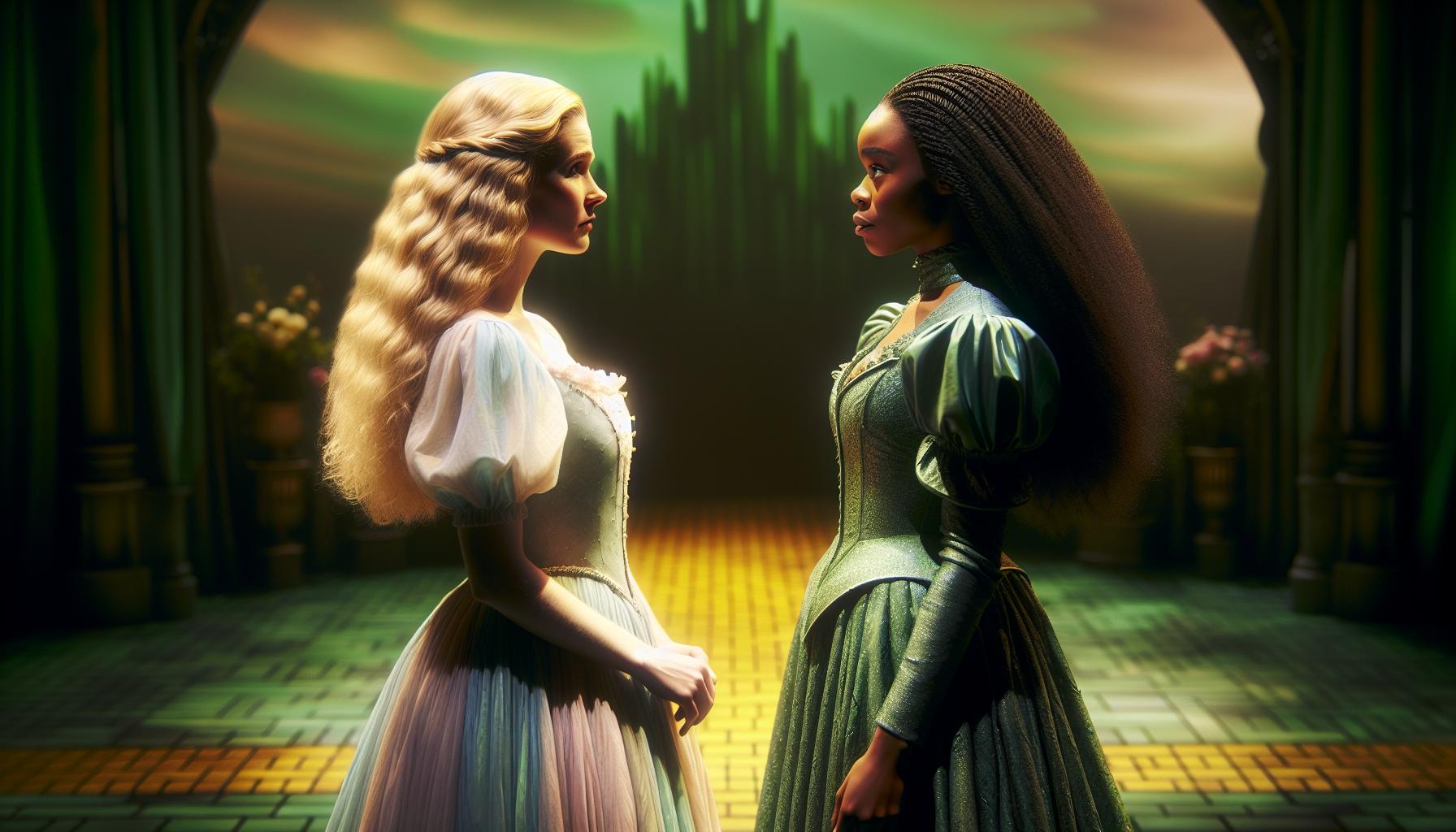
Key Themes of Love in “Wicked
The intricate bond between Glinda and Elphaba in “Wicked” serves as a profound canvas to explore diverse themes of love, identity, and societal constraints. Their relationship, which begins in the idyllic environment of Shiz University, is layered with complexities that challenge the traditional notions of companionship. Initially, it appears as a friendship based on mutual differences-Glinda’s glamorous charm contrasts sharply with Elphaba’s fervent idealism. However, as the narrative unfolds, the question arises: What is the essence of their connection? Is it a reflection of genuine love, rivalry, or an indictment of the societal mores that shape their identities?
Themes of Love
At its core, the relationship between Glinda and Elphaba embodies several themes related to love. First, there is self-love vs. societal love. Elphaba’s transformation into the “Wicked Witch” is a poignant symbol of the alienation faced by those who defy societal norms. Her quest for justice and authenticity requires a deep love for oneself, which, ironically, leads to rejection by the very society she seeks to protect. Meanwhile, Glinda’s trajectory towards conformism emphasizes the societal expectations of love, showcasing a significant tension between personal desires and social validation.
A rivalry underpinned by affection further complicates their dynamic. As they navigate their contrasting values, their bond becomes a battleground for ideals and aspirations. This is exemplified in their interactions where jealousy and admiration coexist, hinting at deeper feelings that extend beyond friendship. The emotional resonance of their exchanges often leads audiences to ponder the possibility of romantic love, a notion that expands during key moments of intimacy and conflict.
Analyzing the Connection
The text also invites readers to examine queer subtext, prompting new interpretations that position their relationship within a broader dialogue on love. In contemporary discourse, the notion that love transcends traditional boundaries aligns closely with the nuances of Glinda and Elphaba’s connection. Their deeply rooted emotional ties suggest a kinship that challenges heteronormative paradigms, pushing the boundaries of how love is portrayed in literature and theater.
Ultimately, the themes of love in “Wicked” not only invite a reflection on Glinda and Elphaba’s relationship but also encourage readers to reconsider the societal constructs surrounding love and identity. By providing a narrative that intertwines love with deep moral questions, Gregory Maguire crafts a story where the journey towards understanding love-whether platonic, romantic, or self-directed-is at the heart of the characters’ transformations. Through this lens, “Wicked” becomes a rich exploration of love as a multidimensional force that shapes not just personal relationships but also societal realities.
Literary Analysis: Friendship vs. Romance
The relationship between Glinda and Elphaba in “Wicked” is a fascinating exploration of the thin line that can exist between friendship and romance. Their bond, which begins in a context rooted in the shared experiences of Shiz University, evolves through various emotional layers that can raise questions about the true nature of their feelings for one another. Throughout the narrative, moments of tension, admiration, and jealousy intermingle, prompting readers to contemplate whether their relationship is predominantly platonic, romantic, or even a combination of both.
The essence of their connection can be examined by considering the distinct characteristics that Glinda and Elphaba represent. Glinda embodies societal expectations, often adhering to norms that value appearance and popularity, while Elphaba resists these constraints in her quest for justice and authenticity. This contrast creates a fertile ground for a complex dynamic where genuine affection intertwines with rivalry. In their interactions, it is not uncommon for emotions to oscillate between support and competition, revealing an intimacy that suggests deeper feelings may exist beneath the surface.
Moreover, the text lends itself to interpretations that extend beyond the binary of friendship and romance. Their relationship can be seen through a queer lens, emphasizing the idea that love can manifest in various forms, challenging conventional categorizations. This aspect of their bond becomes particularly resonant during moments of crisis, where their vulnerabilities are laid bare, showcasing how deeply intertwined their lives have become. Such moments compel audiences to reconsider what love looks like in its many facets, particularly how it can thrive amid conflict and difference.
This nuanced interplay between friendship and romance is cleverly woven into Gregory Maguire’s narrative, inviting readers to reflect on societal constructs surrounding love and identity. The complexity of Glinda and Elphaba’s relationship serves as a microcosm for broader themes of acceptance and understanding, making “Wicked” not just a tale of two witches but also a rich exploration of the human condition.
Understanding the Context of Their Relationship
The relationship between Glinda and Elphaba in “Wicked” unfolds within a richly layered context that ignites questions about love, identity, and societal expectations. Their journey begins at Shiz University, a space that represents not only their formative years but also the contrasting backgrounds from which they emerge. Glinda, the popular and vivacious student, symbolizes conformity, aspiring to fulfill the superficial ideals of beauty and acceptance. In contrast, Elphaba, born with green skin and a fierce sense of justice, challenges these norms, setting the stage for a compelling rivalry laced with mutual admiration.
At Shiz, the two develop an intense friendship marked by both attraction and conflict, which highlights the complexity of their emotional connection. Their differing values create tension; while Glinda vies for social status, Elphaba’s passion for activism and her rejection of societal norms set them apart. For readers, this tension raises pivotal questions: Is their connection born out of respect, admiration, or something deeper? The fluctuating nature of their relationship encapsulates a spectrum of intimacy that reflects both friendship and the potential for romantic feelings.
Moments of Vulnerability play a crucial role in understanding their bond. Instances in which Elphaba reveals her insecurities or Glinda faces the consequences of her choices create an emotional depth that fosters understanding and connection. Such exposure amplifies the sense that their relationship transcends mere friendship; it speaks to a profound love rooted in shared experiences and struggles. For instance, Elphaba’s fierce defense of Glinda against societal prejudices showcases a protective love, while Glinda’s attempts to help Elphaba navigate a world that rejects her reflect a deeper compassion.
This intricate dynamic forces readers to confront the societal constructs surrounding love and friendship, particularly in a world that often seeks to define relationships in binary terms. By embracing the ambiguity of Glinda and Elphaba’s bond, Gregory Maguire invites a broader exploration of what love can look like. Their relationship serves not just as a backdrop for the story but also as a narrative vehicle that challenges traditional views of companionship, urging readers to consider the complexities of human connection amidst the societal pressures that shape our lives.
Character Development of Glinda and Elphaba
The evolution of Glinda and Elphaba in “Wicked” presents a compelling journey of transformation, where both characters reveal their inner complexities against a backdrop of societal expectations and personal ambition. Glinda, initially portrayed as the quintessential popular girl who embraces superficial beauty and social status, gradually shifts to reveal a more nuanced character. Her development reflects the struggles she faces as she grapples with her values and the impact of her choices on those around her. This process of self-discovery encourages readers to think beyond labels, highlighting that even those who seem privileged can face significant internal conflicts.
Elphaba, on the other hand, begins as an outcast, marked by her distinctive green skin and a fierce opposition to injustice. Her character development is defined by her relentless pursuit of what she believes is right, often at the expense of understanding the broader social implications of her actions. Despite her strong will and moral grounding, Elphaba’s path is fraught with loneliness and misunderstandings, which serve to deepen her complexity. As she challenges the oppressive norms of her society, she transforms from a misunderstood girl into a powerful figure, grappling with the consequences of her identity and activism.
As the story unfolds, the intertwining character arcs of Glinda and Elphaba highlight their emotional interdependence. Through their contrasting journeys, the narrative paints a vivid picture of how their friendship-charged with moments of love, rivalry, and betrayal-ultimately drives each character toward deeper self-awareness. Notably, their relationship challenges traditional notions of love, allowing readers to explore the multifaceted nature of their bond.
This intricate interplay not only enriches their characters but also positions them as mirrors of each other, with Glinda’s desire for acceptance juxtaposed against Elphaba’s quest for justice. The complexity of their development invites readers to consider the transformative power of relationships and the internal struggles that define one’s identity, ultimately asking the timeless question: what does it mean to love authentically in a world that often demands conformity?
Author Gregory Maguire’s Intentions
In his reimagining of the classic tale, Gregory Maguire intricately weaves the complexities of human relationships into the fabric of “Wicked.” One of his primary intentions was to challenge the traditional narratives surrounding good and evil, particularly through the polarizing characters of Glinda and Elphaba. Rather than presenting their bond in straightforward romantic terms, Maguire delves into the subtleties of friendship, power, and societal expectations, inviting readers to speculate on the true nature of their connection.
Maguire’s portrayal of Glinda and Elphaba serves as a vehicle for exploring themes of love that transcend mere romance. Throughout the narrative, their relationship evolves from one of superficiality-rooted in Glinda’s early obsession with popularity-to a deeper, more complex understanding of each other as they face societal challenges. This evolution reflects a broader commentary on the transformative power of love and how it can manifest in various forms, including admiration, competition, and ultimately, a profound partnership rooted in shared struggles.
Furthermore, the author intentionally blurs the lines between friendship and love to highlight the emotional interdependence of the characters. Maguire encourages readers to consider how societal pressures influence personal relationships, raising questions about loyalty and sacrifice. By doing so, he aligns the narrative with real-world dynamics, allowing themes of love and acceptance to resonate on multiple levels. The evolution of Glinda and Elphaba’s relationship is not simply a matter of romantic love; it’s about understanding, respect, and the complexities that arise when individuals strive for acceptance in a world filled with prejudice and misunderstanding.
In essence, Maguire’s intention is not just to tell a story about two remarkable women but to prompt readers to reflect on their own relationships and the societal constructs that shape them. By presenting love as something that is multifaceted and often fraught with conflict, he invites an exploration of how love can empower individuals while also complicating their lives. This nuanced approach ultimately enriches the narrative, making “Wicked” a compelling study of the intricate tapestry of human connections.
Comparative Analysis: “Wicked” vs. “The Wizard of Oz
In examining the relationship between Glinda and Elphaba, one must contrast Gregory Maguire’s “Wicked” with L. Frank Baum’s original “The Wizard of Oz.” While Baum presents a linear narrative of good versus evil, focusing on the heroic journey of Dorothy and the villainy of the Wicked Witch of the West, Maguire’s retelling complicates this dichotomy, presenting a nuanced friendship infused with layers of love, rivalry, and complexity.
Maguire’s approach to Elphaba and Glinda diverges sharply from their portrayals in Baum’s classic. In “The Wizard of Oz,” Glinda is depicted as the quintessential good witch who aids Dorothy, while Elphaba is portrayed solely as the antagonist, driven by malice and jealousy. However, Maguire reframes their relationship, using it as a lens through which to explore themes of acceptance and societal judgment. In “Wicked,” Elphaba’s fight against discrimination, spurred by her green skin and differing ideals, serves as a backdrop for her evolving relationship with Glinda. This evolution is pivotal; it transforms from superficial sorority to a deep, albeit fraught connection, reflective of real-world complexities in relationships shaped by external pressures and internal conflicts.
Another significant distinction lies in the representation of love and heroism. In Baum’s narrative, love is largely absent from the relationship between Glinda and Elphaba, as they are primarily defined by their roles in Dorothy’s journey. Conversely, Maguire’s narrative is infused with romantic tension and emotional depth, positing that their bond may encompass more than mere friendship-suggesting a deeper, perhaps unrecognized love. The cast against contrasting societal expectations, their character development showcases how love can manifest not only in romantic ideals but in deeply supportive friendships and mutual empowerment.
By framing Glinda and Elphaba’s relationship through the contemporary lens of societal challenges and the quest for self-identity, Maguire invites readers to reconsider the nature of love and friendship. This richer, more complex portrayal stands as a challenge to the simplistic morality of “The Wizard of Oz,” presenting a narrative that encourages exploration of personal relationships beyond the binary of good and evil. Ultimately, “Wicked” redefines love and heroism, offering a compelling meditation on the multifaceted nature of human connections and the complexities of the heart.
Fan Theories about Glinda and Elphaba’s Love
The relationship between Glinda and Elphaba in “Wicked” has sparked a fascinating array of fan theories, many of which explore the depths of their bond beyond mere friendship. Readers often ponder whether the love shared between these two iconic characters transcends platonic boundaries, reflecting broader themes of connection, acceptance, and the complexity of personal relationships.
One prominent theory suggests that Elphaba’s fierce independence and Glinda’s initial superficiality create a tension that evolves into a profound love. Fans argue that their contrasting personalities-Elphaba as the misunderstood outsider and Glinda as the privileged darling of society-forge a unique connection. This theory posits that the love felt between them is more than just rivalry; it mirrors the complexities found in many real relationships marked by vulnerability and mutual growth. Critics of the theory, however, assert that Maguire intended their relationship as a commentary on friendship rather than romance, emphasizing themes of societal judgment and individual struggle.
Another captivating perspective involves the idea of unrequited love, wherein Elphaba harbors deeper feelings for Glinda throughout the narrative, while Glinda remains blissfully unaware. This reading aligns with the trope of the “tragic hero,” elevating Elphaba’s character from mere villainy to one who endures emotional solitude and yearning. Proponents of this theory often cite significant moments in the text where Elphaba exhibits intense vulnerability around Glinda, suggesting an emotional depth that may be interpreted as love.
Furthermore, some fans delve into the notion that their love represents a larger commentary on acceptance and identity in a rigid society. They argue that, regardless of its romantic nature or lack thereof, the profound admiration and respect they develop for each other serve as a powerful symbol of love’s resilience in the face of societal norms. This interpretation invites readers to reflect on their experiences and relationships, challenging them to think about how love can foster strength and courage, manifesting in various forms, including deep friendship.
In exploring these theories, one uncovers the richness of the relationship between Glinda and Elphaba, a testament to Gregory Maguire’s multifaceted storytelling. Fans continue to engage with the text, bringing personal insights and emotional experiences to their interpretations, which only deepens the understanding of love as portrayed in “Wicked.”
Critical Reception: Love Interpretations in “Wicked
The nuanced relationship between Glinda and Elphaba in Wicked has elicited a diverse array of interpretations, particularly concerning the nature of love within their dynamic. This multifaceted bond blurs the lines between friendship and romance, compelling readers and critics alike to explore deeper meanings behind their interactions. One of the strongest sentiments emerging from critical reception is the belief that their relationship embodies a fundamental tension between societal expectations and personal desire.
One significant interpretation posits that Elphaba’s fierce independence serves as a foil to Glinda’s initial naivety, creating a compelling narrative of growth and transformation. Critics argue that Glinda’s evolution from a superficial character to one who understands and appreciates Elphaba’s struggles encapsulates a profound journey of love characterized by mutual respect and understanding. This transition embodies a form of love that transcends traditional romantic constructs, illustrating how deep friendships can challenge societal norms and propel individuals toward personal growth. This perspective is supported by moments in the novel where Elphaba’s vulnerabilities are exposed, prompting Glinda’s transformation and signifying the power of their connection.
In contrast, there is also significant discourse surrounding the notion of unrequited love. According to this interpretation, Elphaba’s feelings for Glinda are deep and complex, overshadowing Glinda’s obliviousness to her friend’s emotional struggles. This view aligns Elphaba with the archetype of the tragic hero, illuminating her character with a depth that is both moving and relatable. Critics who support this interpretation point to pivotal interactions between the two characters, where Elphaba’s emotional intensity bubbles to the surface, suggesting that her affection may exceed mere friendship. These moments compel readers to ponder whether Maguire intended to craft a story that reflects the pain of unreciprocated affection amid genuine friendship.
Understanding the critical reception of love interpretations in Wicked invites readers to delve into their own experiences, examining the layers of love that can exist in various relationships. By challenging conventional notions of love, Gregory Maguire not only tells a story about two formidable women but also creates a canvas on which readers can project their interpretations of connection, acceptance, and the true essence of companionship in a world laden with expectations. The ongoing dialogue surrounding Glinda and Elphaba’s love illustrates Wicked‘s enduring impact, reminding us all of the complexities inherent within our own relationships and the love that can arise from them.
Symbolism of Love and Power in the Narrative
In the narrative of Wicked, love and power are intricately intertwined, symbolizing broader themes of acceptance, individuality, and societal influence. The dynamic between Glinda and Elphaba exemplifies how personal connections can both empower and constrain individuals, reflecting the struggle between societal norms and personal desires. Their journey illustrates that love is not merely an emotion; it acts as a vehicle for empowerment and, at times, becomes a source of conflict.
Elphaba, often seen as an embodiment of fierce independence, symbolizes the strength that comes from embracing one’s true self, regardless of societal rejection. This is sharply contrasted with Glinda, who initially conforms to societal expectations. Their contrasting responses to love and power dynamics are instrumental in their character development. For instance, Glinda’s eventual recognition of Elphaba’s struggles represents a shift in her understanding of power-moving from a desire for social validation to a deeper appreciation of her friend’s battles against discrimination and injustice. This evolution underscores the idea that true love includes an acknowledgment of the struggles one faces and a commitment to understanding and supporting each other.
Moreover, the motif of power in their relationship is often expressed through the context of magical abilities. Elphaba’s power symbolizes both danger and potential, as societal perceptions often dictate how her abilities are interpreted and treated. In many ways, her power can be seen as a metaphor for the complexities of love; it is both a source of strength and vulnerability. Glinda’s initial fear of Elphaba’s power reflects societal anxieties around individuals who challenge the status quo. As their bond deepens, however, Glinda learns to harness her own influence, showing that love can empower individuals to become advocates for change.
Ultimately, the symbolism of love and power in Wicked portrays an intricate interplay between personal and societal dimensions. The narrative challenges readers to reflect on their own experiences with love-how it can serve as both a source of strength and a mechanism of societal pressure. As Glinda and Elphaba navigate their complex relationship, they exemplify how love can inspire growth, mutual respect, and a redefinition of power dynamics, encouraging a more profound understanding of acceptance and compassion.
How “Wicked” Challenges Traditional Love Stories
In a world where love stories often culminate in romantic relationships, “Wicked” stands out by subverting traditional narratives, inviting readers to reconsider the very essence of love and its myriad forms. The complex connection between Glinda and Elphaba is emblematic of this challenge, reflecting not merely romantic interest but a deeper exploration of friendship, loyalty, and personal growth. By presenting love as multifaceted and often fraught with conflict, Gregory Maguire prompts readers to engage with themes that transcend typical fairy tale conventions.
Instead of portraying an idealized romance, “Wicked” delves into the emotional labyrinth that characterizes human relationships. The evolution of Glinda and Elphaba’s friendship serves as a powerful reminder that love is not always straightforward. For instance, Glinda’s initial superficiality and desire for acceptance clash with Elphaba’s fierce independence and socially marginalized identity. This conflict highlights a key theme: true love often requires confrontation with uncomfortable truths and the willingness to support one another in the face of societal adversities. Rather than merely a backdrop for romance, their relationship becomes a lens through which the complexities of love-its joys, sacrifices, and struggles-are vividly illustrated.
Furthermore, the narrative boldly challenges the notion that love must conform to conventional ideals. As Glinda and Elphaba navigate their differences, they learn that love can exist in many forms, even within the bounds of friendship or rivalry. The tension and eventual understanding that develop between them illustrate how love can inspire profound personal change. Their journey encourages readers to embrace love not just as an emotion but as a transformative force that can foster empathy and understanding, challenging stereotypes about how romantic and platonic relationships should function.
By engaging with the story of Glinda and Elphaba, readers are invited to resist tidy conclusions about love and to acknowledge its inherent messiness. The novel proposes that love is not simply a means to an end, but a continuous process of negotiation and understanding that can extend beyond personal desires. This reimagining of love-one that emphasizes personal growth and acceptance over mere attraction-ultimately enriches the story, ensuring that “Wicked” is not just a retelling of a classic tale but a nuanced exploration of the complexities and responsibilities inherent in human connections.
Lessons on Love and Acceptance in “Wicked
In “Wicked,” Gregory Maguire presents a storyline that offers profound lessons about love and acceptance, challenging readers to reconsider what these concepts truly entail. At its core, the relationship between Glinda and Elphaba serves as a microcosm for understanding love’s complexities, pushing beyond traditional romantic ideals to explore the themes of friendship, acceptance, and personal transformation.
One crucial lesson is that love often requires vulnerability and the courage to confront difficult truths. Throughout the narrative, Glinda and Elphaba are confronted with their contrasting values and societal pressures. Glinda’s journey from superficiality to deeper empathy exemplifies this transformation. Her evolving friendship with Elphaba teaches her that true love-whether platonic or romantic-demands not only understanding but also active support in the face of adversity. As they navigate their differences, readers witness how acceptance can foster resilience and personal growth. This journey highlights the significance of forgiveness and the willingness to embrace flaws-both in oneself and others.
Additionally, the narrative emphasizes that love can manifest in various forms, far beyond conventional romance. The intricate dynamics between the two characters underscore that profound connections can arise from friendship, rivalry, and mutual respect. For instance, Elphaba’s fierce independence and Glinda’s initial desire for conformity create a rich tapestry of conflict and reconciliation, ultimately enriching their bond. By depicting love as dynamic and multifaceted, “Wicked” encourages readers to recognize that acceptance is essential in all relationships, allowing love to flourish in diverse and unexpected ways.
In summary, Maguire’s reimagining of love in “Wicked” compels readers to appreciate the transformative power of acceptance and understanding in their own lives. Just as Glinda and Elphaba learn to embrace their differences and support one another, readers are encouraged to celebrate the spectrum of love that exists within their relationships, ultimately leading to greater empathy and connection.
Q&A
Q: Were Glinda and Elphaba romantically involved in “Wicked”?
A: The relationship between Glinda and Elphaba in “Wicked” is complex and open to interpretation. While some readers view their bond as a deep friendship infused with romantic elements, others argue it represents a profound platonic connection. Exploring this tension highlights themes of love and acceptance throughout the narrative.
Q: How does “Wicked” depict love between women?
A: “Wicked” portrays female love through the nuanced relationship between Glinda and Elphaba. Their interactions challenge traditional romantic narratives and instead emphasize friendship, loyalty, and empowerment. This representation can inspire readers to rethink the nature of love in literature.
Q: What symbols represent love in “Wicked”?
A: In “Wicked,” symbols such as the color green (representing Elphaba) and Glinda’s bubble signify the contrasting worlds of the two witches. These symbols reflect their emotional journeys and the complexities of love and friendship that define their relationship.
Q: Why do fans speculate about a romantic relationship between Glinda and Elphaba?
A: Fans speculate about a romantic connection due to the intense emotional bond and moments of vulnerability shared between Glinda and Elphaba. This speculation is often fueled by the portrayal of their relationship both in the book and its adaptations, inviting diverse interpretations.
Q: What did Gregory Maguire intend with Glinda and Elphaba’s relationship?
A: Gregory Maguire aimed to create a multi-dimensional relationship that reflects the struggles of identity, acceptance, and societal constraints. By depicting their bond, he invites readers to delve into themes of love that transcend conventional definitions.
Q: How do Glinda and Elphaba’s relationships evolve throughout “Wicked”?
A: Glinda and Elphaba’s relationship evolves from friendship to a more complicated dynamic marked by jealousy, betrayal, and ultimately, understanding. This evolution mirrors their personal growth and the broader themes of societal expectations and personal freedom.
Q: Are there differing opinions on the nature of Glinda and Elphaba’s love?
A: Yes, opinions on the nature of Glinda and Elphaba’s love vary widely. Some readers see it as a romantic connection, while others interpret it as a deep, platonic friendship. This divergence reflects individual perspectives on love and connection in literature.
Q: How does “Wicked” compare love to power?
A: “Wicked” intricately compares love to power by illustrating how both can be transformative and destructive. Elphaba’s quest for justice and Glinda’s pursuit of acceptance showcase the interplay between love, ambition, and moral choices in their characters’ lives.
In Summary
As we explore the intricate relationship between Glinda and Elphaba in “Wicked,” it’s clear there’s much more beneath the surface than mere friendship. Whether you believe their bond was rooted in love or something more complex, the implications of their connection invite deeper reflection on loyalty, society, and identity. Don’t miss the chance to dive further into the world of Oz-check out our articles on the themes of love and sacrifice in “Wicked” and the character arcs of Glinda and Elphaba.
Join the conversation by sharing your thoughts in the comments. Did our analysis resonate with your understanding of the characters? For exclusive insights and updates, consider subscribing to our newsletter. Stay curious, keep exploring, and unravel the enchanting truth behind your favorite stories!